

Two Air Forces, One Choice: Why India and Israel Are Backing the AH-64E Apache in the Age of Drones | aviationbizz.com
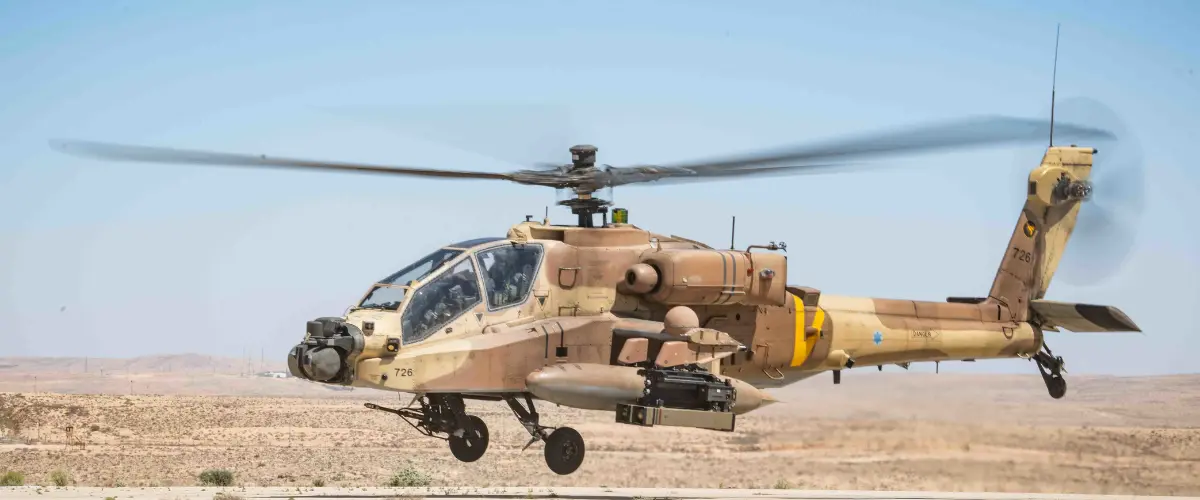
Although attack helicopters are often exposed to danger when operating in low-altitude, close-combat environments, nations such as Israel and India continue to invest heavily in the American-built AH-64E Apache.
On January 30, 2026, the United States Defense Security Cooperation Agency (DSCA) cleared a possible Foreign Military Sale worth approximately $3.8 billion to Israel. The proposed package includes 30 Boeing AH-64E Apache helicopters along with 70 engines, advanced targeting and night-vision systems, radar equipment, and logistical support infrastructure.
Israeli defence officials consider the potential acquisition a significant milestone in upgrading the Israeli Air Force’s (IAF) attack helicopter fleet. The timing of the approval has drawn attention, as it comes during heightened geopolitical tensions in West Asia and amid a substantial American military presence in the region, raising speculation about a broader confrontation involving Iran.
The renewed focus on attack helicopters is particularly noteworthy given their increasing exposure to modern threats. The widespread availability of one-way attack drones — capable of striking aerial assets directly — has introduced new battlefield risks. In addition, shoulder-fired air defence weapons such as MANPADS and short-range air defence systems pose serious challenges to helicopters operating at low altitudes.
Because attack helicopters often fly “nap-of-the-earth,” staying close to terrain to avoid radar detection, they can become vulnerable to ground-based fire. During the early stages of the Ukraine conflict, Russian helicopters reportedly faced heavy losses, leading some analysts to question their survivability in modern high-intensity warfare.
However, experienced air power analysts argue that attack helicopters still occupy a unique operational space. Retired Indian Air Force Air Marshal Anil Chopra has previously noted that these platforms serve a role few others can match. Capable of flying at speeds around 350 km/h, they can use terrain for concealment, briefly rise to engage targets with precision missiles, and quickly reposition — a tactic often described as “shoot and scoot.”
He further emphasized that the Apache remains among the most capable and battle-proven anti-armour platforms in service today. Beyond anti-tank missions, it also plays an important role in countering drones and hostile helicopters, adding versatility to its battlefield functions.
Israel’s Apache Modernization Drive
Israeli defence authorities have pointed to recent combat experience to justify the need for additional AH-64E helicopters. During the October 7 Hamas attacks and the subsequent conflict, Apache helicopters reportedly played a crucial role in providing rapid response, identifying hostile elements, supporting ground troops, and preventing cross-border infiltration attempts.
Officials have also acknowledged that sustained high-intensity operations placed considerable strain on the existing fleet. With a limited number of aircraft available, continuous rotations for refuelling, rearming, and maintenance reduced operational flexibility during prolonged engagements.
At present, the Israeli Air Force operates two main Apache variants: the older AH-64A models introduced in the 1990s and the more advanced AH-64D Longbow versions equipped with improved radar and avionics. The proposed acquisition of the latest AH-64E variant would significantly enhance Israel’s combat helicopter capabilities, ensuring improved survivability, networking capacity, and operational endurance in evolving battlefield conditions.
News Courtesy:The EurAsian Times
About the Author