
Why Russian fighter jets use landing parachutes compared to US jets | aviationbizz.com
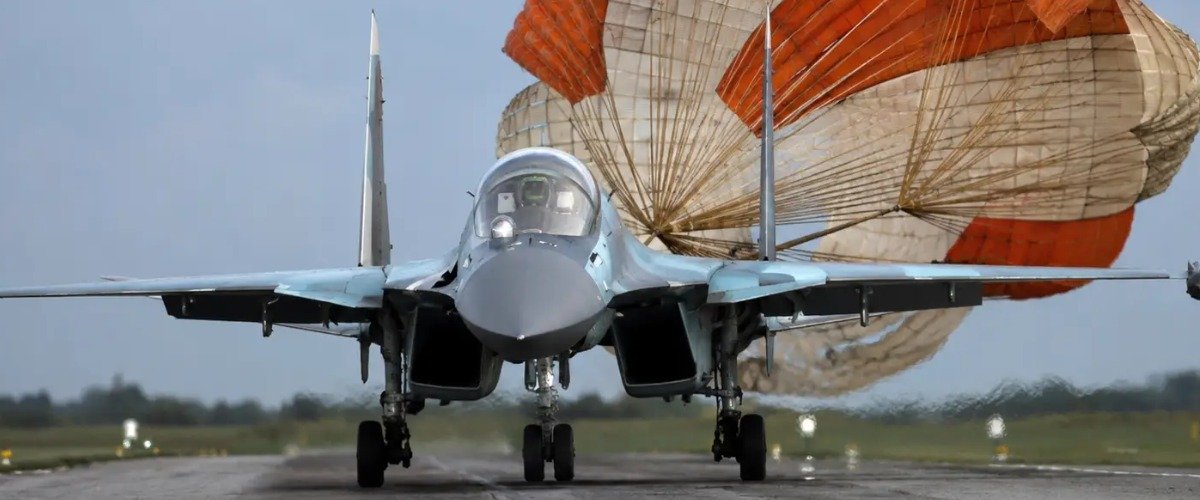
Russian fighter jets are commonly equipped with braking parachutes, a feature that sets them apart from many Western aircraft. This design choice is rooted in operational flexibility and environmental conditions.
Russia has a vast geography with numerous remote or semi-prepared airfields, many of which have shorter runways or are subject to harsh weather such as snow, ice, and rain. In such conditions, braking performance can be significantly reduced, making drag parachutes an effective and reliable solution to quickly decelerate the aircraft after touchdown.
The parachute deploys immediately upon landing, creating aerodynamic drag that reduces speed rapidly without relying solely on wheel brakes. This not only shortens landing distance but also minimizes wear and tear on braking systems, increasing overall aircraft longevity and safety.
In contrast, U.S. fighter jets are generally designed to operate from well-maintained airbases with long, high-quality runways and advanced arresting or braking systems. Technologies such as anti-skid braking, thrust reversers (in some aircraft), and runway arrestor cables provide sufficient stopping power, reducing the necessity for drag parachutes in most situations.
However, it is worth noting that some Western aircraft still retain parachutes for specific scenarios, such as emergency landings or operations in extreme environments. Overall, the use of braking parachutes in Russian jets reflects a practical, rugged design philosophy focused on adaptability and performance under diverse and challenging conditions.
Source: Wionews
About the Author