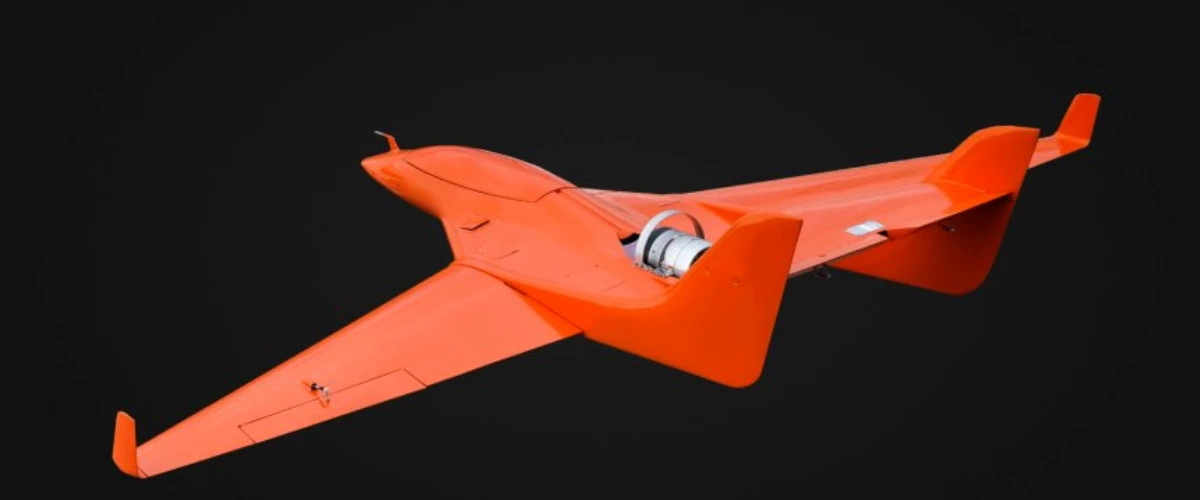
The Indian Army has procured the Belarusian Berkut-BM unmanned aerial vehicle from Mirotvorets (Peacemaker), marking a significant step in expanding its long-range precision strike and unmanned warfare capabilities.
Designed as a high-speed strike drone, the Berkut-BM is optimised for destroying surface-to-air missile systems, multiple-launch rocket systems, artillery positions, reconnaissance and radio-warfare assets, as well as columns of lightly armoured and motorised vehicles and enemy manpower. The induction of the Berkut-BM reflects the Army’s growing emphasis on fast, expendable, deep-penetration strike platforms that can neutralise high-value battlefield assets without exposing manned aircraft or ground forces to risk. In modern high-intensity conflict, such drones are emerging as critical tools for suppressing enemy air defences, disrupting artillery networks and paralysing command-and-control infrastructure in the opening phase of operations.
The Berkut-BM is powered by a compact turbojet engine mounted between its twin tail booms, giving it a maximum speed of up to 500 kilometres per hour. This high dash speed significantly reduces enemy reaction time and complicates interception by short-range air defence systems. Depending on flight altitude and mission profile, the drone has a practical operational range of up to 180 kilometres and an endurance of approximately 45 minutes.
Armed with a 10-kilogram high-explosive fragmentation warhead, the Berkut-BM is capable of inflicting serious damage on radar installations, missile batteries, artillery gun positions and logistics nodes. Its strike profile is designed for rapid ingress, terminal dive and precision impact, making it well-suited for time-sensitive targets that must be destroyed before they can relocate. The drone is catapult-launched, allowing it to be deployed from forward areas without the need for runways or complex ground infrastructure. This gives field commanders the ability to launch precision strikes from concealed or mobile positions, adding a new layer of flexibility to battlefield operations.
While the Berkut-BM was originally developed as a high-speed aerial target for air defence training, its design has been adapted into a strike configuration, leveraging its speed, agility and compact size for offensive missions. The turbojet-powered layout between the twin tails gives the drone a distinct profile and allows for efficient propulsion within a relatively small airframe. Operationally, the Berkut-BM fills an important niche between slow-moving propeller-driven loitering munitions and large, expensive armed UAVs. It offers a low-cost, high-speed strike option that can be launched in numbers to overwhelm enemy defences or conduct coordinated attacks against multiple targets.
For the Indian Army, the platform adds a new dimension to its emerging doctrine of unmanned deep strike, where drones are used not only for reconnaissance and surveillance but as frontline offensive weapons capable of shaping the battlefield before conventional forces engage. The procurement also reflects a broader trend within the Indian armed forces toward diversifying their unmanned arsenal with a mix of loitering munitions, strike drones, reconnaissance UAVs and high-speed expendable platforms. This layered unmanned ecosystem is intended to provide persistent surveillance, rapid strike and saturation attack capability across the tactical and operational depth of the battlefield.
News Courtesy: Indian Defence Research Wing