Airplane
Flying has become somewhat routine for many travelers—the Federal Aviation Administration’s Air Traffic Organization provides service for around 2.9 million passengers every day. Flights have become more accessible than ever before, but there is still a lot of mystery around how flying really works.
Before you hop on your next flight, here are 10 fun airplane facts that may surprise you.
Planes can get struck by lightning—and it’s not a big deal.
Ever fly close to the storm and worry about that flash outside your window? Well, it’s just another day in the sky for pilots. Commercial aircraft get zapped by lightning once or twice a year, but passengers rarely notice when it happens. Modern aircraft are designed to let electrical charges run through without affecting critical systems inside. In fact, lightning hasn’t brought down a commercial plane in the United States since 1967.
Private jets dodge turbulence better than commercial flights.
Although turbulence rarely causes injury (if you wear your seatbelt), those who want to avoid it may have to consider private jets. According to Ari Wohl, president and founder of Tribeca Jets, private jets can avoid turbulence better than commercial planes.
“They have more flexible routes and can adjust their flight paths more easily than commercial flights that follow rigid air traffic control routes,” says Wohl. “They fly at higher altitudes, sometimes above 40,000 feet, while commercial airliners cruise at around 35,000 feet.”
Long-haul flights have secret crew bedrooms.
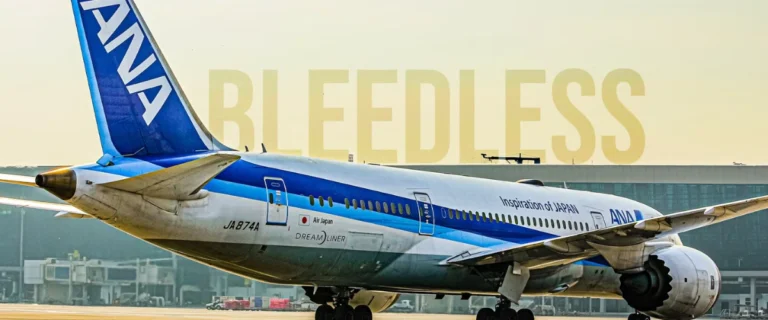
On 14-plus hour flights, flight attendants aren’t just powering through on coffee and willpower. Many wide-body aircraft like the Boeing 777 and 787 Dreamliner hide secret crew rest areas passengers never see. These cozy hideaways are typically accessed via hidden staircases and feature beds, a bathroom, and sometimes entertainment systems.
Many airlines pretend row 13 doesn’t exist.
Check the row numbers on your next flight. You’ll likely see that the numbers jump from 12 to 14. Like how hotels often skip the 13th floor, many airlines skip row 13 when numbering seats. “This is said to be an intentional homage to Western superstitions that say the number 13 is unlucky,” says Henri Chelhot, CEO of booking platform FlightHub. “It’s also meant to ease passengers who may be a bit uneasy with air travel without the ‘unlucky number’ hanging over their heads.”
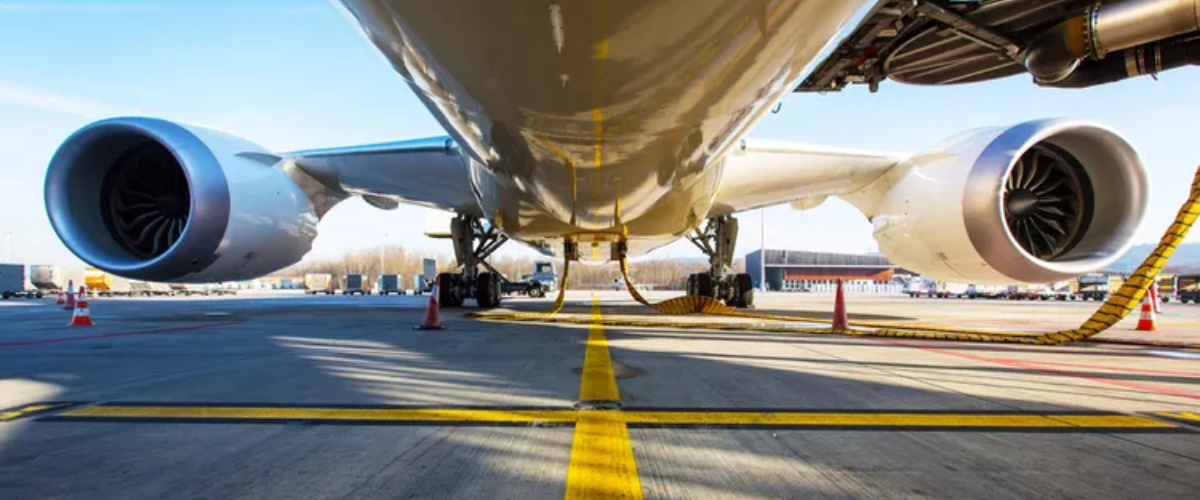
Planes can fly just fine with only one engine.
An engine failure midflight sounds like the beginning of a nightmare, but commercial planes can fly with just one engine, explains Daniel Bubb, professor, former airline pilot, and aviation history expert at the University of Nevada, Las Vegas. And if all engines fail? Planes don’t just drop from the sky. Pilots have plenty of time during a descent from cruising altitude to find somewhere to land safely.
You can still find ashtrays on planes.
Smoking has been prohibited on commercial flights since 2000, yet every airplane bathroom still has an ashtray. The FAA explicitly requires ashtrays in certain aircraft areas regardless of the airline’s smoking policies. That’s because aviation safety regulators recognize that some passengers might attempt to smoke during flights. If you do try to smoke, the hope is that you’ll put your cigarette out in a safe receptacle and not the general trash bin, where it can cause a fire—but you will still be fined.
It’s not just your imagination—food tastes different at 35,000 feet. The combination of low humidity and air pressure can alter the way you perceive taste.
“At 35,000 feet, the perception of salt reduces by 30 percent,” says Leona Qi, the U.S. president of VistaJet, a private jet charter company. “Humidity in the home is typically around 45 percent. In an aircraft, it can be 20 percent or less, desensitizing taste buds.” Qi also notes that even the constant hum of background noise on flights can impact your perception of smell and taste.
Those oxygen masks only give you 15 minutes of air—but that’s plenty.
The passenger oxygen masks that drop in the event of cabin depressurization have about 12 to 15 minutes of oxygen, which comes from a chemical reaction rather than pressurized oxygen tanks. While that may seem like a short amount of time, it’s more than enough for an emergency descent. Pilots, on the other hand, have separate oxygen system that comes from pressurized cylinders that last much longer.
Pilots never eat the same meal.
Bubb says that it’s true that pilots on the same flight must eat different meals. “If a pilot eats a meal and is unable to perform [their] duties, the other pilot will take control of the plane,” says Dr. Bubb. “… the other pilot is obligated to eat a different meal in case there is any food poisoning.”
News Courtesy : Travelandleisure
About the Author