

AviationBizz : As helicopter technologies continue to evolve, how does your organization identify future maintenance challenges and develop solutions that enhance component lifecycle and operational efficiency?
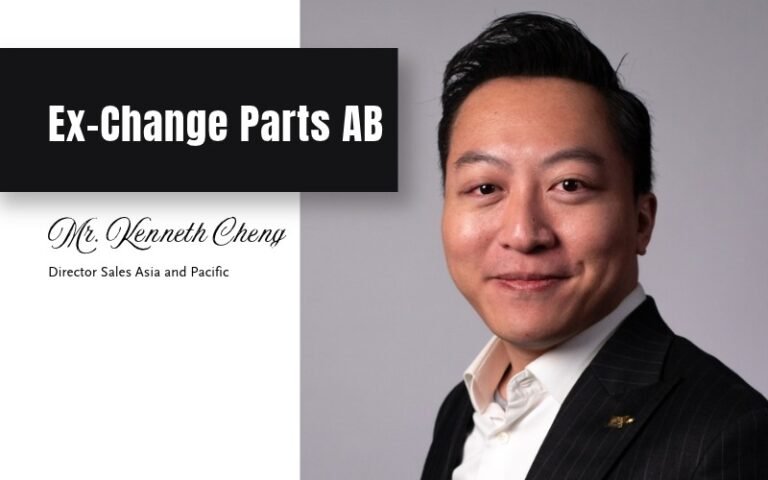
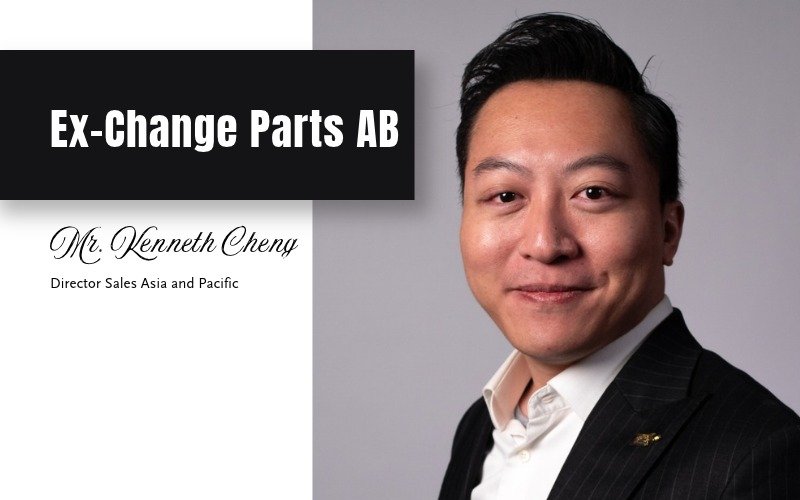
Kenneth Cheng : At Ex-Change Parts AB, anticipating future maintenance challenges begins with staying closely connected to the helicopter operators, MRO organisations, leasing companies, and OEM ecosystem that we support every day. Our founders built the company on decades of hands-on helicopter maintenance and operational experience, and that practical understanding remains deeply embedded in our culture today.
We continuously monitor market trends, fleet demographics, component reliability patterns, regulatory developments, and the changing operational requirements of helicopter operators worldwide. Because we support customers across a wide range of platforms and geographical regions, we often gain early visibility into emerging maintenance challenges, supply chain constraints, and shifting demand for specific components.
One of our key strengths is having the capability to study and analyse historical component removal trends, maintenance patterns, fleet demographics, and reliability data across multiple helicopter platforms. By analysing these long-term cycles, we can identify recurring component requirements and anticipate future demand before it materialises. This enables us to strategically position inventory, improve forecasting accuracy, and help operators secure critical components ahead of need, ultimately reducing aircraft downtime and improving fleet availability.
Coupled with our extensive inventory of more than 80,000 line items today, built through decades of strategic acquisitions of surplus inventories and helicopter part-out programmes, this analytical approach allows us not only to react quickly to market needs but also to identify long-term opportunities to support ageing fleets and increasingly scarce components. By forecasting demand and preserving valuable assets within the aftermarket ecosystem, we help operators mitigate maintenance risks while maintaining aircraft availability.
Enhancing component lifecycle is also central to our business philosophy. Rather than viewing components as single-use assets, we focus on maximising their value through repair management, exchange programmes, component recovery, and responsible asset lifecycle management. Through our global network of approved repair partners, we help customers obtain cost-effective solutions that extend service life while maintaining the high standards of safety and quality expected within the aviation industry.
Sustainability plays an increasingly important role in this strategy. Long before circular economy principles became widely discussed within aviation, Ex-Change Parts AB was helping operators reduce waste by recovering, exchanging, repairing, and reusing serviceable components. By extending the useful life of existing assets, we can help customers reduce maintenance costs, improve operational efficiency, and contribute to a more sustainable aviation future.
Looking ahead, we see considerable potential in emerging technologies, including artificial intelligence, to further strengthen forecasting, inventory planning, and operational decision-making. However, we believe that technology must be implemented responsibly and sustainably. Rather than adopting AI for its own sake, we are carefully evaluating how it can create meaningful value for our customers and complement the expertise of our people. Our focus is on combining human experience, technical knowledge, and data-driven insights to deliver practical solutions that improve operational outcomes.
AB : How is your engineering team leveraging digital technologies, predictive maintenance, or advanced inspection techniques to improve component reliability and reduce aircraft downtime?
KC : At Ex-Change Parts, we combine engineering expertise with data-driven decision making to improve reliability, availability, and cost predictability for operators. Our technical and analysis teams continuously study historical component removals, repair trends, and fleet operating data to anticipate maintenance requirements and position inventory proactively, reducing the risk of aircraft-on-ground events.
We also have dedicated specialists who monitor global market demand and pricing, ensuring that we can offer components at highly competitive levels. Our exchange programmes are supported by extensive repair knowledge and historical reliability insights, helping us offer more predictable and competitive lifecycle solutions.
Additionally, initiatives such as Receiving 2.0 at our Borlänge warehouse enhance digital traceability, inspection efficiency, and data accuracy, helping us reduce turnaround times and maximise fleet availability for our customers.
AB : How do you evaluate new opportunities for innovation while ensuring compliance with stringent aviation safety and certification standards across global markets?
KC : Innovation in aviation must always be balanced with compliance. At Ex-Change Parts, we stay abreast of evolving airworthiness and certification requirements through disciplined market research, close engagement with regulatory authorities, OEMs, and industry stakeholders across the markets we serve. This enables us to anticipate regulatory changes and ensure our solutions remain fully compliant while continuing to meet customer needs.
Over the years, we have continually adapted our inventory strategy and operational processes to align with changing regulatory frameworks. A good example is the JCAB BASA agreement, which required us to ensure that components supplied to customers in Japan were supported by certification documentation that satisfied local airworthiness requirements. By proactively responding to such developments, we can continue to deliver innovative aftermarket solutions while maintaining the highest standards of safety, traceability, and regulatory compliance.
AB : What strategic principles have enabled Ex-Change Parts AB to build long-term partnerships with helicopter operators and maintenance organizations across the world?
KC : We believe transparency is the foundation of trust. We do not over-promise or oversell our capabilities. Instead, we provide customers with honest assessments, clear communication, and solutions that genuinely meet their operational needs. We put actions behind our words and words behind our actions. Trust is earned over many years of reliable performance. In an industry where safety, availability, and compliance are paramount, reputation matters. The opportunities we enjoy today are the result of decades spent delivering on our commitments and being a dependable partner when our customers need us most. Consistency reinforces that trust. Customers know they can expect the same high level of quality, responsiveness, and professionalism regardless of the size or complexity of the requirement.
Finally, flexibility allows us to adapt to an increasingly complex global environment. As geopolitical and regulatory landscapes continue to evolve, we remain agile in our sourcing strategies and support model, ensuring we can continue delivering exceptional solutions to operators and MROs worldwide.
AB : How does your organization continuously refine its operational processes and technical capabilities to remain competitive in a rapidly changing aviation ecosystem?
KC : I would like to highlight our Receiving 2.0 initiative, an AI-powered receiving process that automatically captures component data plate information and cross-references it against accompanying documentation. This reduces manual data entry, improves accuracy, accelerates inventory processing, and helps identify discrepancies at an early stage.
In light of recent concerns surrounding counterfeit aviation parts, Receiving 2.0 also strengthens our ability to verify component identity and traceability upon receipt, helping us identify, quarantine, and investigate suspect material before it is accepted into available inventory. This enhances compliance and customer confidence.
AB : What role does collaboration with OEMs, MRO providers, and technology partners play in accelerating innovation and improving service quality?
KC : At Ex-Change Parts, we continuously assess the performance of our MRO partners, evaluating key metrics such as turnaround time, quality, reliability, and customer service to ensure that only the highest standards are delivered to our customers. However, our relationship extends well beyond supplier performance monitoring. We work closely with our OEM and MRO partners to share market intelligence, repair trends, and technical insights, jointly developing repair solutions that improve cost efficiency without ever compromising airworthiness, quality, or safety.
At the same time, we are constantly seeking new MRO partnerships to broaden our repair capabilities, expand technical expertise, and strengthen support across different platforms and regions. By combining our aftermarket experience with the capabilities of trusted repair organisations, we can provide customers with faster turnaround times, competitive repair solutions, and greater fleet availability while maintaining the highest industry standards.
AB : What initiatives is Ex-Change Parts AB undertaking to support workforce development, community engagement, and responsible industry growth?
KC : At Ex-Change Parts, we believe responsible industry growth starts with investing in people. Every year, our leadership team works closely with employees to identify personal and professional development goals, and they are genuinely committed to helping us achieve them through training, mentorship, and meaningful opportunities. This creates a culture of continuous learning, engagement, and long-term career development. Beyond our own organisation, we recognise our responsibility to contribute positively to the wider community. As part of our commitment to social responsibility, Ex-Change Parts makes annual donations to UNICEF and has also supported humanitarian relief efforts through contributions to child support initiatives in Ukraine. We believe that growing as a company should go hand in hand with supporting the communities and people around us.
By combining employee development, community engagement, and sustainable business practices, we strive to build a stronger company while contributing to a more responsible and compassionate global aviation industry.
AB : How do these platforms contribute to business development, partnerships, and technology exchange?
KC : Strong partnerships are built on trust, transparency, and consistent performance. At Ex-Change Parts, our ISO 9001 and ASA-100 certifications demonstrate our commitment to delivering quality products and services while maintaining robust processes that our customers and partners can rely upon. Beyond quality standards, we have maintained a Triple-A credit rating for several consecutive years, reflecting our financial stability and reinforcing confidence among customers, suppliers, and vendors worldwide. We have also been recognised through multiple nominations for Sweden’s prestigious Dagens Industri Gasell award, highlighting our commitment to continuous improvement, sustainable growth, and business excellence. These achievements help create a strong foundation for long-term partnerships, open collaboration, and the exchange of knowledge and technology throughout the global aviation aftermarket. They provide confidence that Ex-Change Parts is not only a capable supplier, but also a reliable and trusted partner for the long term.
About the Author