
Here’s How The Boeing 787 Dreamliner’s Cabin Air System Is Different Than Every Other Aircraft | aviationbizz.com
The result is a system that not only improves comfort but also supports better fuel efficiency and environmental performance. This is something that passengers really notice, particularly on ultra-long-haul flights between the likes of Los Angeles International Airport (LAX) and Sydney Airport (SYD) or London Heathrow Airport (LHR) to Perth Airport (PER). Let’s take a closer look at what makes the Boeing 787’s cabin air system so different from that of other aircraft.
A Different Source Of Cabin Air
On the vast majority of commercial aircraft flying today, such as the Boeing 777, Airbus A350, or Airbus A320 families, cabin air comes from what is known as bleed air. This involves taking a portion of the high-pressure, high-temperature air that’s compressed inside the jet engines’ compressor stages and routing it through ducts to the environmental control system. Once there, it is cooled, conditioned, mixed with recirculated cabin air that’s been through HEPA filters, and then supplied into the cabin at a comfortable temperature and pressure. Bleed air provides both pressurization and ventilation, and it has been the industry standard for decades.
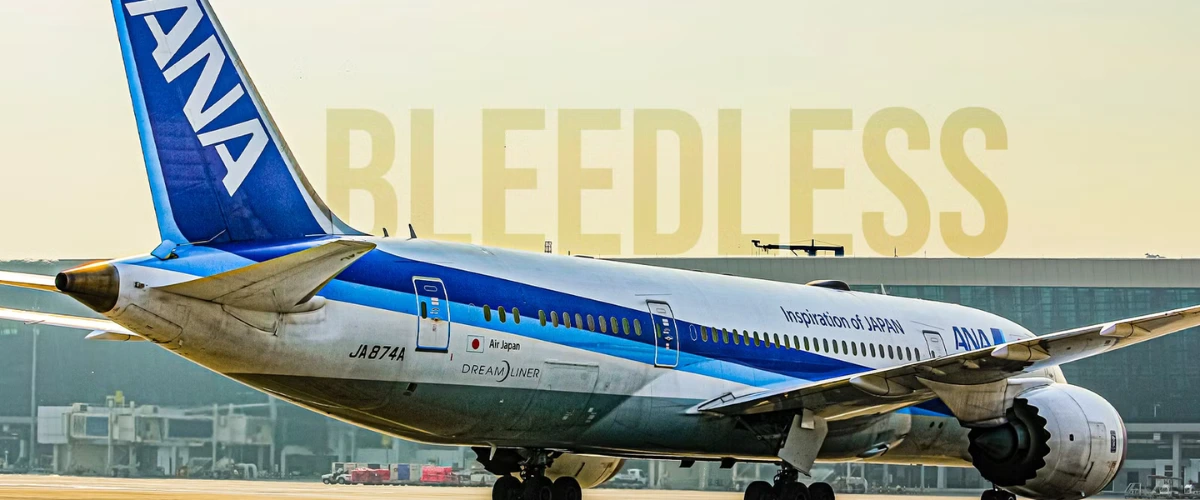
However, the Boeing 787 changes that completely, as instead of bleeding air off the engines, the aircraft draws fresh air directly from the atmosphere outside the aircraft through dedicated intake inlets ahead of the wings. That air does not pass through the engines at all, and instead, it goes to electric compressors that pressurize and feed it into the environmental control system. This set-up, often called bleedless or no-bleed, is fully integrated with the aircraft’s electrical generation system, which typically includes four engine-mounted generators and two auxiliary power units (APUs) to make sure that there is always enough electricity to drive the compressors and other onboard systems.
Why Move Away From Bleed Air?
With bleed air having been used for so long, it begs the question, why change it? There are several meaningful advantages to the Boeing 787’s no-bleed cabin air system. Firstly, eliminating bleed air reduces the load on the engines, as when bleed air is taken off the compressor stages, that air has already been pressurized, and as a result, it partially robs the engine of some of its efficiency and thrust. By using electric compressors instead, the 787’s engines can devote more of their power to producing thrust and less to powering ancillary systems. This contributes, along with other design innovations, to the 787 being around 20% more fuel-efficient than previous-generation aircraft.
Secondly, the lack of bleed air means there are fewer pneumatic parts, which simplifies the aircraft’s maintenance profile and reduces the number of components that can fail, saving airlines money and reducing downtime. It also reduces weight, which further improves efficiency.
Another benefit that resonates closely with passengers is comfort. With a bleedless system, it is easier to manage not just temperature, but also humidity and purity. The Boeing 787’s environmental control system can maintain slightly higher humidity levels than older aircraft like the Boeing 767 typically do, and the outside air feed means the air in the cabin is always completely refreshed regularly, roughly every two to three minutes, making it feel fresher and less stale. This can make a big difference for passengers on the ultra-long-haul flights often operated by the Boeing 787, such as San Francisco International Airport (SFO) to Singapore Changi Airport (SIN), flown by United Airlines, or Paris Charles De Gaulle Airport (CDG) to Perth Airport (PER), operated by Qantas.
Cabin Pressurization & Breathing Comfort
The Boeing 787’s approach does not just improve air sourcing; it also changes how the cabin feels. Traditional aircraft usually maintain a cabin altitude equivalent to about 8,000 ft when at cruising altitude, meaning that passengers often feel fatigue over many hours.
However, with the Boeing 787’s more advanced structure, thanks to its carbon-fiber composite fuselage, the aircraft can safely maintain a lower cabin altitude of about 6,000 ft. At that pressure difference, passengers’ bodies perceive the air as slightly richer in oxygen, helping to reduce fatigue. Since the air itself is coming straight from outside rather than from engine bleed, and is blended with recirculated but HEPA-filtered air, passengers often report a fresher sensation.
Electric Compressors vs Engine Bleed
At the center of the Boeing 787’s improved cabin air system are its electric compressors, which are driven by electricity produced by the engines and the APU. In practice, that means that the aircraft’s four main engine generators are humming away, powering everything from the environmental control system to flight controls.
The air drawn in from outside is processed through heat exchangers and cooling packs, just like on older systems, but without the heat load and inefficiencies of bleed air. That lets Boeing fine-tune the cabin environment more precisely, regulating temperature and humidity in ways that older bleed systems could only approximate.
Even though some limited bleed for functions like engine cowl anti-icing still exists on the Boeing 787, the core pressurization and environmental control are electrified. This leap makes the 787 a showcase for Boeing’s more-electric aircraft philosophy, where electrical systems replace traditional hydraulic and pneumatic ones where practical.
Air Quality & Health Perceptions
Another big talking point around bleed systems, even before the 787 came along, was cabin air contamination. In conventional bleed air systems, there is always a theoretical risk (albeit rare) that engine oil or hydraulic fluids could enter the bleed air stream and be carried into the cabin. These incidents are known as fume events and are a point of concern in some aviation health discussions.
By not using bleed air for cabin ventilation, the Boeing 787 eliminates that particular risk, as the air supplied to the cabin of a 787 comes from outside the engines and is filtered and conditioned electrically before entering the cabin. While all modern airliners use HEPA filters and regularly refresh cabin air, the 787 takes it a step further by removing engine bleed entirely from the cabin air circuit.
It is worth noting that while the Boeing 787 pioneered this design, other aircraft manufacturers have not universally adopted it yet. The upcoming Boeing 777X reverts to a more conventional bleed architecture, and the Airbus A350 family still uses bleed air for its environmental control systems.
That means the Boeing 787 still stands out in the skies as the only production airliner with this kind of true bleedless cabin air system, making the air that passengers and crew members breathe onboard fundamentally different from almost every other aircraft out there. Its blend of fresh outside air, electric power, advanced filtration, and clever environmental control sets it apart, and for many flyers, that difference is more than just technical trivia; it is part of what makes the 787 feel like such a modern aircraft that still has plenty of years left in it.
A Hugely Successful Aircraft
The Boeing 787 is the most commercially successful widebody aircraft in history, having sold and delivered more than 1,200 examples since 2011. The aircraft entered commercial service in October 2011 on a flight between Tokyo Narita Airport (NRT) and Hiroshima Airport (HIJ), operated by the  Star Alliance carrier All Nippon Airways. Today, the Japanese carrier remains the world’s largest operator of the 787, with a total of 86 currently in its fleet, according to the latest data from ch-aviation.
Even today, almost 15 years after the Boeing 787 entered commercial service, momentum continues to build around the aircraft‘s orderbooks, with fresh widebody demand emerging from both established and start-up carriers. One of the most closely watched developments involves Riyadh Air, which is progressing plans for significant widebody growth as it prepares to scale long-haul operations from its hub at Riyadh King Khalid International Airport (RUH).
News Courtesy: Simpleflying
About the Author