

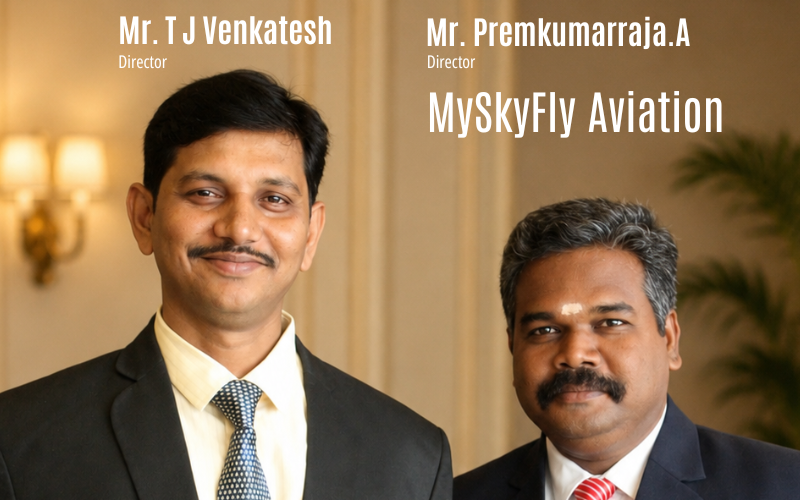
Myskyfly Aviation India has a motto of “Power is gained by sharing knowledge, not hoarding it.
AviationBizz :What industry needs or opportunities led to the establishment of the institute, and how has its vision transformed since then?
Premkumarraja.A : MySkyFly Aviation India was established with the objective of bridging the gap between academic education and industry requirements by producing highly skilled, career-ready professionals. The inspiration behind the institute was to provide quality education that combines theoretical knowledge with practical exposure, enabling students to confidently enter competitive industries such as aviation, hospitality, healthcare, fashion, psychology, and emerging technologies. Over the years, this vision has expanded beyond conventional classroom learning to include industry partnerships, placement assistance, skill development, and technology-driven education. Today, MySkyFly continues to focus on preparing students for global career opportunities by continuously upgrading its programs, enhancing practical training, and creating an educational environment that encourages professionalism, innovation, and lifelong learning.
AB : The institute emphasizes that “Power is gained by sharing knowledge, not hoarding it.” How does this philosophy influence your teaching methods, student engagement, and organizational culture?
PA : At MySkyFly, the belief that knowledge becomes more valuable when shared forms the foundation of its educational philosophy. This principle encourages faculty members to adopt interactive teaching methods where students actively participate through discussions, presentations, practical sessions, case studies, and collaborative learning activities. Rather than focusing solely on textbook instruction, the institute promotes open communication between students and mentors, creating an environment where ideas, experiences, and industry insights are exchanged freely. This culture also extends beyond the classroom by encouraging teamwork, peer learning, leadership development, and continuous mentorship. As a result, students not only strengthen their academic knowledge but also develop confidence, communication skills, and the ability to work effectively in professional environments.
AB : Looking ahead, what long-term goals and milestones do you hope MySkyFly Aviation India will achieve in the rapidly evolving aviation education sector?
PA : MySkyFly Aviation India aims to become one of the leading professional education institutions by continuously adapting to the changing needs of the aviation and service industries. The institute’s long-term vision includes expanding its academic offerings, strengthening collaborations with airlines, healthcare organizations, hospitality companies, and international educational partners. It also seeks to enhance practical training facilities, integrate advanced technologies into learning, and improve placement opportunities for students across India and abroad. Another important milestone is to develop graduates who possess not only technical expertise but also leadership qualities, ethical values, and global perspectives. Through continuous innovation and industry engagement, MySkyFly aspires to contribute significantly to the development of a highly skilled workforce for the future.
AB : MySkyFly offers programs across aviation, hospitality, healthcare, psychology, fashion, and AI. What strategic vision drives this multidisciplinary approach to professional education?
PA : The multidisciplinary approach adopted by MySkyFly reflects its commitment to preparing students for the diverse and evolving demands of today’s global workforce. Instead of limiting education to a single industry, the institute offers programs across multiple professional domains that share common requirements such as communication, customer service, leadership, technical competence, and adaptability. This strategy enables students to explore varied career opportunities while developing transferable skills that remain valuable across industries. By integrating academic excellence with practical exposure and industry-focused training, MySkyFly creates graduates who are capable of succeeding in dynamic professional environments. The institute believes that multidisciplinary education enhances employability, encourages innovation, and provides students with greater flexibility in shaping their careers.
AB : With a strong placement record and partnerships with universities, how does the institute ensure that academic excellence is consistently aligned with industry expectations?
PA : MySkyFly maintains close interaction with industry partners, recruiters, and academic collaborators to ensure its educational programs remain relevant to current market needs. The curriculum is designed to balance theoretical knowledge with practical application through skill-based training, internships, workshops, guest lectures, and industry interactions. Faculty members continuously encourage students to develop communication skills, professionalism, problem-solving abilities, and customer-oriented thinking alongside technical competencies. The institute also emphasizes placement preparation through personality development, interview coaching, and career guidance programs. These combined efforts ensure that graduates possess both the academic foundation and practical skills required by employers, enabling them to transition successfully into professional careers across multiple industries.
AB : What distinguishes MySkyFly Aviation India from other professional training institutes, particularly in terms of curriculum, mentorship, and career outcomes?
T J Venkatesh : One of MySkyFly’s key strengths lies in its student-centric approach that combines quality education, practical training, personalized mentorship, and career-focused development. The curriculum is designed to meet current industry standards while incorporating practical learning experiences that prepare students for real workplace challenges. Faculty members provide continuous academic guidance and individual mentoring, helping students build confidence, communication skills, and professional discipline. The institute also focuses strongly on employability by offering placement support, interview preparation, personality development, and opportunities for industry interaction. This holistic educational model enables students to graduate with the technical knowledge, practical exposure, and professional competencies required for successful careers in aviation, hospitality, healthcare, and other emerging sectors.
AB : Your academic portfolio spans both degree and diploma programs. How do you continuously update the curriculum to keep pace with changing industry standards and employer requirements?
TJV : Keeping the curriculum aligned with evolving industry expectations is an ongoing priority at MySkyFly. The institute regularly reviews its academic programs by considering industry trends, technological advancements, employer expectations, and feedback from academic and corporate partners. Practical learning components such as case studies, internships, workshops, and skill-based training are incorporated to complement theoretical instruction. Faculty members also stay updated with emerging developments in their respective fields, enabling them to introduce relevant concepts into classroom teaching. This continuous improvement process ensures that students acquire current knowledge, practical competencies, and professional skills that increase their employability and prepare them for successful careers in competitive industries.
AB : How do your faculty members integrate practical case studies, simulations, and experiential learning into the classroom to prepare students for real-world challenges?
TJV : At MySkyFly Aviation India, practical learning is considered an essential part of the educational experience. Faculty members complement classroom instruction with case studies, role-playing exercises, group discussions, presentations, and scenario-based learning that reflect real workplace situations. For aviation and hospitality students, simulations help them understand customer service, operational procedures, and decision-making under realistic conditions. Industry examples and current trends are also incorporated into lessons, enabling students to relate theoretical concepts to practical applications. In addition, workshops, seminars, and interaction with industry professionals provide valuable exposure to real business environments. This experiential approach enhances students’ confidence, critical thinking, communication skills, and problem-solving abilities, ensuring they are well prepared to meet the expectations of employers from the very beginning of their careers.
AB : Could you highlight the key infrastructure and training facilities that provide students with a practical learning environment comparable to real industry settings?
TJV : MySkyFly has developed an academic environment that supports both theoretical learning and practical skill development. The institute provides modern classrooms equipped with audio-visual teaching aids, well-organized learning spaces, and facilities designed to encourage interactive education. Students benefit from practical training sessions, workshops, and industry-oriented learning activities that simulate professional work environments. The institution also focuses on creating a disciplined and professional atmosphere where students can develop technical competencies alongside interpersonal and leadership skills. By combining quality infrastructure with experienced faculty and hands-on learning opportunities, MySkyFly ensures that students gain practical exposure that prepares them for careers in aviation, hospitality, healthcare, and other professional sectors.
AB : How does the institute ensure that its classrooms, laboratories, and training resources remain updated with the latest technologies used in aviation and hospitality industries?
TJV : MySkyFly recognizes that industries are continuously evolving, making it essential for educational institutions to update their learning resources regularly. The institute periodically reviews its infrastructure, teaching methodologies, and training resources to align with changing industry standards. Faculty members remain informed about emerging technologies and operational practices through continuous professional development and industry engagement. Digital learning tools, multimedia teaching methods, and practical training sessions are incorporated wherever appropriate to enhance student learning. Feedback from industry experts, recruiters, and academic partners also helps identify areas for improvement. This commitment to continuous enhancement ensures that students receive education and training that reflects current industry practices and prepares them for modern workplace environments.
AB : Are there any ongoing investments in advanced training infrastructure, simulation technologies, or digital learning platforms to enhance future student experiences?
TJV : MySkyFly is committed to continuously improving the quality of education by exploring opportunities to strengthen its academic infrastructure and learning technologies. As industries increasingly adopt digital transformation, the institute recognizes the importance of investing in modern training facilities, technology-enabled classrooms, and innovative teaching methodologies. Future initiatives are expected to focus on expanding digital learning platforms, incorporating advanced simulation-based training, and enhancing practical learning resources to provide students with a more immersive educational experience. By monitoring technological advancements and evolving industry requirements, MySkyFly aims to create a learning environment that equips students with both technical expertise and digital competencies needed for future careers.
AB : Industry exposure plays a significant role in career readiness. How does MySkyFly collaborate with airlines, hospitality organizations, and corporate partners to provide meaningful practical experience?
TJV : Industry collaboration is one of the key strengths of MySkyFly’s educational model. The institute works closely with airlines, hospitality organizations, healthcare institutions, and other corporate partners to provide students with practical exposure through internships, industrial visits, guest lectures, workshops, and recruitment drives. These collaborations allow students to observe professional operations, understand industry expectations, and interact directly with experienced professionals. Such experiences help bridge the gap between classroom learning and real-world applications while enabling students to build professional networks. By maintaining strong industry relationships, MySkyFly ensures that students gain valuable practical insights and develop the confidence required to transition smoothly into their chosen careers.
AB : Internships and industrial visits are valuable learning opportunities. How are these experiences structured to maximize students’ professional development before graduation?
TJB : MySkyFly carefully structures internships and industrial visits to ensure students receive meaningful exposure to professional work environments. These experiences are designed to complement classroom learning by allowing students to apply theoretical concepts in practical settings. During internships, students work alongside experienced professionals, observe daily
operations, and develop workplace skills such as communication, teamwork, customer service, and problem-solving. Industrial visits provide first-hand knowledge of organizational processes, operational standards, and industry best practices. Faculty members also encourage students to reflect on their learning experiences and relate them to their academic studies. This structured approach enhances career readiness and prepares graduates to meet industry expectations with greater confidence.
AB : As aviation and hospitality continue to adopt smart technologies, how do you ensure students graduate with the digital competencies required for future workplaces?
TJV : The adoption of smart technologies across aviation, hospitality, and service industries has made digital competency an essential skill for today’s professionals. MySkyFly addresses this need by integrating technology into both classroom instruction and practical training. Students are introduced to digital learning platforms, modern industry practices, and technology-enabled operational concepts relevant to their chosen fields. Faculty members also encourage continuous learning by exposing students to current industry developments and emerging technological trends. Practical assignments, workshops, and industry interactions further strengthen students’ understanding of digital tools and workplace expectations. This balanced approach ensures that graduates possess not only technical knowledge but also the digital adaptability needed to succeed in technology-driven professional environments.
AB : MySkyFly has built a strong reputation through student placements and industry collaborations. Which achievements or milestones are you most proud of, and why?
TJV : One of MySkyFly’s most significant achievements is its ability to consistently prepare students for successful careers through quality education, industry-oriented training, and placement support. The institute takes pride in establishing collaborations with leading organizations and educational partners that provide students with valuable opportunities for internships, practical exposure, and employment. Another important milestone is the expansion of its academic portfolio into multiple professional disciplines, enabling students to pursue diverse career paths. Equally rewarding is the success of its graduates, many of whom have secured positions in reputed organizations.
About the Author