
Airbus eyes two-aircraft FCAS solution amid wider programme reset | aviationbizz.com
Airbus remains open to a two-aircraft solution within the tri-national Future Combat Air System (FCAS) programme if the nations backing the multi-billion-euro project decide to pursue that option.
But the airframer is uncertain whether this can be achieved within the current industrial set-up supporting FCAS and is seeking a “partial reset” of the programme, said Mike Schoellhorn, head of Airbus Defence & Space, speaking at the company’s Defence Summit event in Manching near Munich on 20 May.
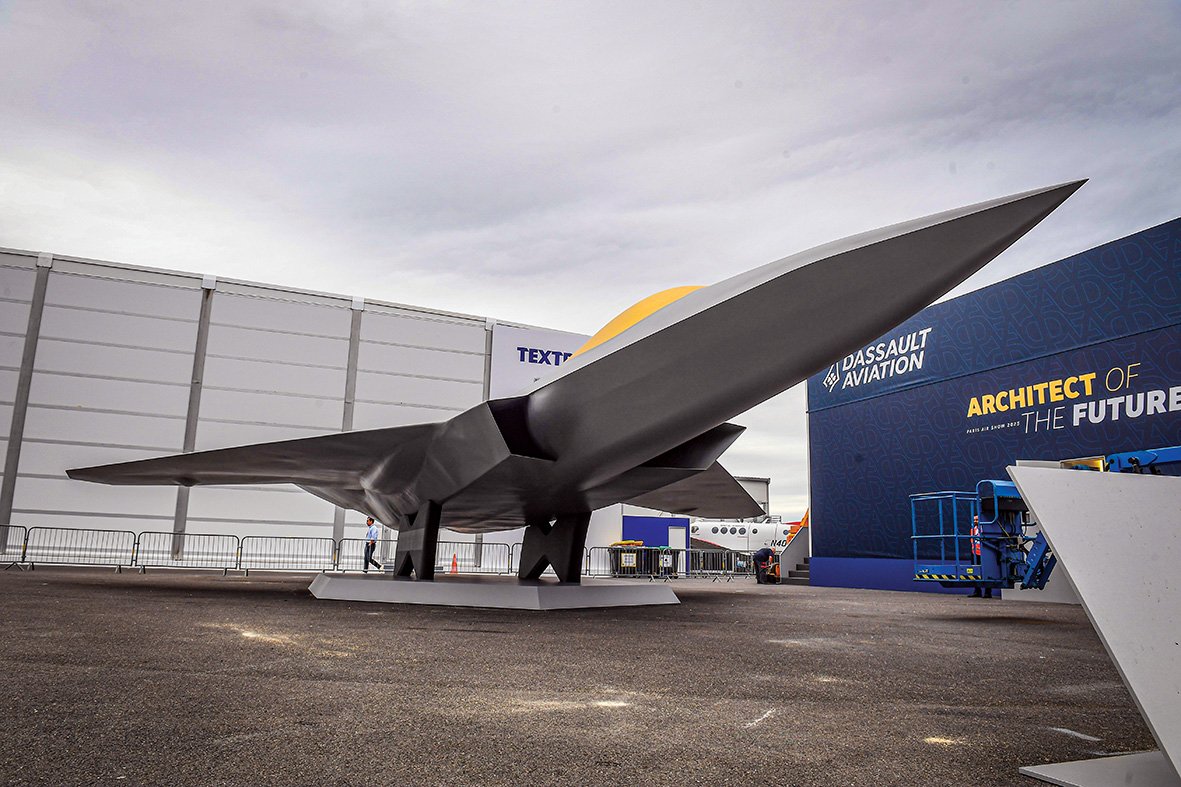
Since its inception in 2017, FCAS has been focused on a single aircraft within its manned New Generation Fighter (NGF) component, led by Dassault Aviation on behalf of France.
But with competing demands from the FCAS nations – France needs a nuclear-capable jet that can also operate from aircraft carriers while Germany and Spain want an air dominance fighter – there is a growing acknowledgement that this cannot be achieved with a single platform, says Schoellhorn.
Such a solution would be a “compromise that is less and less achievable”, he says, with that initial design shaped by the less intense security environment seen last decade.
Guillaume Faury, Airbus chief executive, says as the project was launched “in peace time” – prior to the start of the Ukraine war in 2022 – it was based on “a number of assumptions which are no longer valid today”.
This drove the partner nations to accept compromises on specification to “get to a product at a minimum cost”, he says, adding: “Now we are in a scenario of potential conflict, real conflict or war, the specifications become more important.”
On that basis, changes to the scope of the programme are needed, he suggests: “I think it’s better to face the difficulties and the realities of what will come in the next decade for FCAS now rather than correct it later when we have gone a long way forward.”
But he stresses that “the governments have to decide the way forward”.
While the development of two different NGF aircraft has not so far been on the table, Airbus remains open to the concept.
“I’m supportive of finding a solution and if the solution cannot be or would not be a one-fighter solution then I support a two-fighter solution,” says Schoellhorn.
Although this would increase costs “I don’t think this would be by very much”, he says, particularly in relation to the likely cost and complexity of taking the competing requirements “and trying to integrate them into one [aircraft]”.
However, the move would likely face opposition from Dassault, which has frequently been at loggerheads with its partner over leadership of the NGF development.
Schoellhorn thinks the two-aircraft solution could be achieved “but what it takes to do that is the will to do it, and [that] has to be there politically and industrially”.
“All I am saying is that we have the will to do it and the will to make it happen, I will not speak for any other parties in this because, obviously, if it was easy, then we would already have a solution.”
But whether Airbus and Dassault can continue to work together remains an open question, with Faury noting that “not all companies are capable of co-operating with each other”.
Schoellhorn says the company is “open to collaborating with a partner that’s willing to collaborate”, but ultimately could be forced to look elsewhere.
“Currently it looks like that collaboration with Dassault is not going as we had planned it, so there’s alternatives that we need to assess at the right point in time, but that requires a political decision first.
“That’s where we need an industrial alignment that is better than what we have today, but we also need a political alignment, so you need both to tango and that is currently being thrashed out.”
With the NGF currently in Phase 1B, there is as yet no agreement to support the transition to Phase 2 and the development of a full-scale demonstrator.
However, the remaining ‘pillars’ within the broader FCAS project are progressing well, says Schoellhorn.
These include a combat cloud, adjunct fighters, sensors and a new engine.
But it is unclear whether two different NGF aircraft would also require different engines.
Schoellhorn says it is too early to say definitively but adds it would “likely not” be the same engine across the two jets.
“Is it going to be a family of engines? Possible, but that again takes the same will to make that happen.”
news courtesy: Flight Global
About the Author