


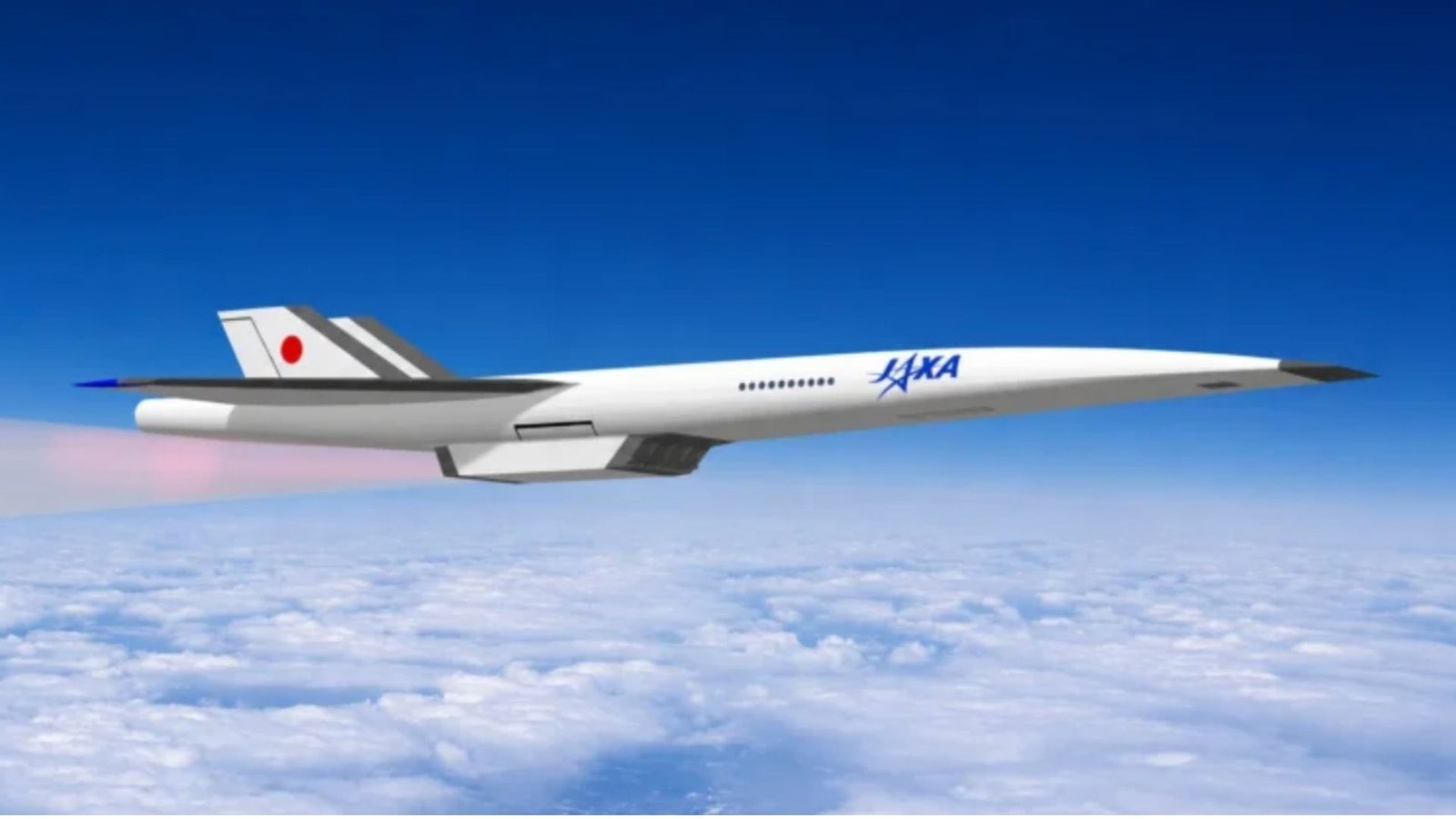
Ramjet engine for Mach 5-speeding hypersonic aircraft tested at 1,832°F by Japan | aviationbizz.com
Japan has completed a ground combustion test of a ramjet engine designed for a Mach 5-class experimental aircraft, advancing the country’s ambitions in hypersonic transportation and reusable spaceflight research.
The test was carried out by the Japan Aerospace Exploration Agency alongside Waseda University, The University of Tokyo, and Keio University as part of a collaborative research program focused on integrated airframe and propulsion control for hypersonic vehicles.
Researchers installed the experimental aircraft inside a ramjet engine testing facility at JAXA’s Kakuda Space Center in Miyagi Prefecture, where they simulated flight conditions at Mach 5 – roughly five times the speed of sound.
The test validated the aircraft’s thermal protection system, control surfaces, and ramjet combustion performance under extreme hypersonic conditions.
Advancing hypersonic ambitions
At such speeds, temperatures surrounding the aircraft can soar to nearly 1,832°F. According to JAXA, the aircraft’s heat-shielding structure successfully maintained near-normal internal temperatures, allowing onboard avionics and control electronics to function properly throughout the experiment.
The team analyzed surface temperature distribution across the aircraft to verify thermal-structure analysis techniques that could prove critical for future hypersonic designs.
Researchers additionally measured exhaust-temperature distribution from the hydrogen-fueled ramjet engine to gather environmental impact data tied to next-gen hypersonic propulsion systems.
Withstanding tough flight conditions
The aircraft was manufactured through a joint university-agency initiative funded by the Japan Society for the Promotion of Science. The broader project aims to develop a hypersonic flight testbed using sounding rockets while demonstrating integrated airframe-propulsion control during flight.
Hypersonic vehicles require tightly coupled airframe and engine designs because airflow and propulsion activity directly influence each other at extreme speeds, unlike conventional aircraft.
Shock waves generated around the aircraft alter airflow entering the engine, while thrust output affects the aircraft’s aerodynamic stability. Engineers therefore treat the propulsion system and airframe as a single integrated system rather than separate components.
About the Author