

Safran-GTRE AMCA Engine Deal Faces Competition After Rolls-Royce–Reliance Entry | aviationbizz.com
The proposed partnership between Reliance Industries and Rolls-Royce has changed the competitive landscape of India’s Advanced Medium Combat Aircraft (AMCA) engine programme.
The development introduces a competing option to the proposed collaboration between French aerospace company Safran and India’s Gas Turbine Research Establishment (GTRE), which operates under the Defence Research and Development Organisation (DRDO).
In early August 2026, reports indicated that the Safran-GTRE proposal had been submitted to the Cabinet Committee on Security (CCS), with approval expected before India’s Independence Day. The proposal involved developing a new engine with either 120 kN or 140 kN of thrust and producing nine prototype engines. The intellectual property associated with the engine was proposed to be fully owned by India.
However, there has been no public confirmation that the CCS approved the proposal, and no final development contract between Safran and GTRE has been announced. The proposal therefore remains under consideration.
Competitive Proposal
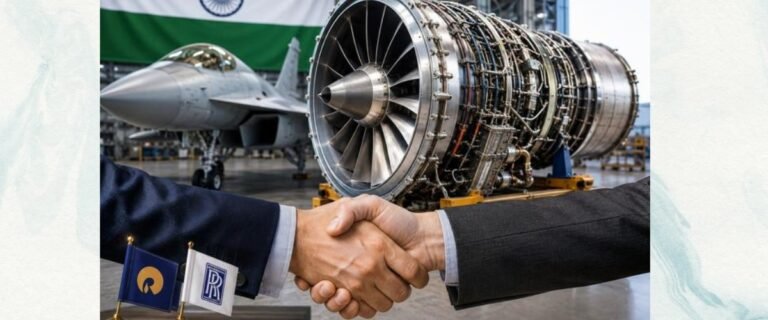
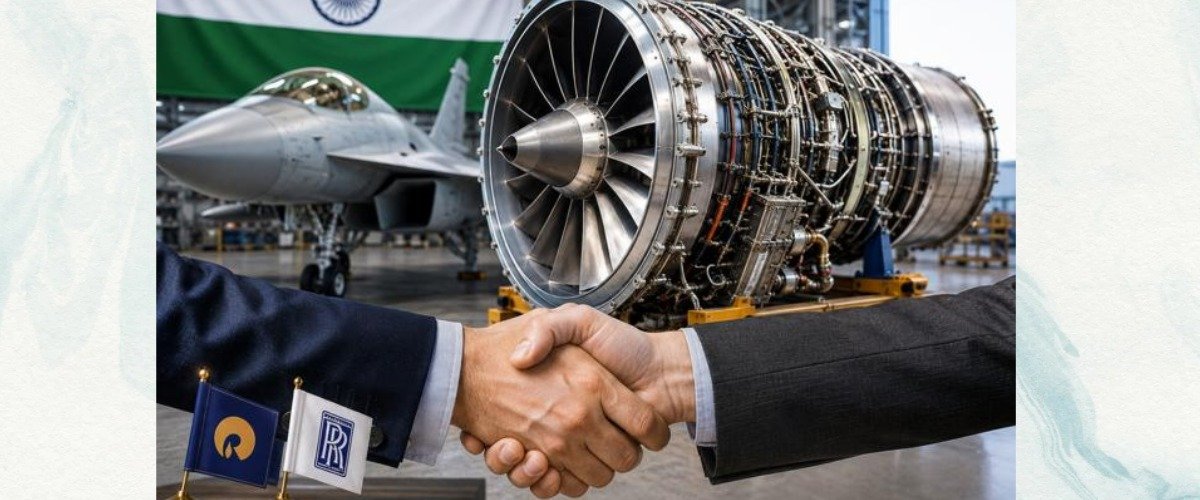
On August 14, Reliance Industries and Rolls-Royce announced their intention to jointly develop and manufacture an indigenous combat engine for the AMCA programme. The companies also proposed exploring the establishment of a dedicated Aerospace Gas Turbine Complex in India.
The partnership introduces another industrial option, combining Rolls-Royce’s military engine expertise with Reliance’s manufacturing capabilities and private-sector industrial resources.
Safran Close to Approval?
The Safran-GTRE proposal appeared to be progressing during the first week of August. On August 1, the Hindustan Times reported that the proposal had been submitted to the CCS, with approval anticipated before August 15.
The proposed engine would initially deliver 120 kN of thrust, with the possibility of increasing it to 140 kN. The development programme was expected to include nine prototype engines, with complete intellectual property ownership in India.
Meta-Defense reported on August 5 that Safran and GTRE had submitted their proposal to the CCS on August 4. If approved, negotiations would begin towards a final agreement, followed by a formal cooperation agreement.
Nevertheless, there has been no public announcement confirming approval or Safran’s final selection as the development partner.
Several important matters also remain to be resolved, including development costs, technology transfer, intellectual property rights and future export rights. Janes previously reported that alternative engine manufacturers’ proposals were also being considered by the government.
Therefore, the progress of the Safran proposal should not be interpreted as confirmation of a signed development agreement.
Rolls-Royce Joins Through Reliance
The August 14 announcement involving Reliance Industries and Rolls-Royce introduced a significant development to the AMCA engine programme.
Rather than focusing only on importing or locally manufacturing an existing foreign engine design, the proposed partnership aims to jointly develop an indigenous combat engine in India.
The companies are also exploring a dedicated Aerospace Gas Turbine Complex to strengthen India’s wider propulsion technology capabilities.
India’s objective is to develop expertise across the complete aerospace engine development process, including design, engineering, manufacturing, testing and long-term support. The intention is to establish substantial domestic technological ownership rather than simply manufacture an overseas-developed engine.
Rolls-Royce has indicated that its proposal would involve technology transfer and Indian ownership of newly developed intellectual property. However, the final terms of any government-approved agreement have not been publicly disclosed.
On August 27, Defense News reported that Rolls-Royce was emerging as a serious competitor to Safran’s proposal, which remained under consideration.
Two Options Under Consideration
A significant indication of the changing situation came from Defence Secretary Rajesh Kumar Singh on November 16 at the ANI National Security Summit 3.0.
Singh confirmed that the government was considering two proposals for the AMCA engine programme. The first involves the public-sector collaboration between GTRE and Safran, while the second comes from the private sector.
He confirmed that both options remained under consideration.
The Defence Secretary also announced a major workshop scheduled to take place in Bengaluru in December. Representatives from several DRDO laboratories, private-sector companies and the Indian Air Force are expected to participate.
The objective is to establish a coordinated national aero-engine development programme in which different organisations contribute their expertise, complement one another’s capabilities and avoid duplication of work.
The government has indicated its preference for a whole-of-industry approach, potentially bringing together private manufacturers and public-sector research organisations.
Although the Defence Secretary did not identify the private-sector proposal by name, the publicly announced Reliance-Rolls-Royce partnership is the most prominent proposal matching this description.
Competitive Situation
The AMCA engine programme has entered a more competitive phase compared with its position in early August. While the Safran-GTRE proposal appeared to be approaching an important government decision, the entry of Reliance and Rolls-Royce has introduced another publicly visible development option.
However, it would be premature to conclude that Safran has lost the programme. There has been no official announcement stating that Safran has been rejected, withdrawn or replaced by Rolls-Royce.
Similarly, the Reliance-Rolls-Royce announcement represents a strategic intention to collaborate. It does not confirm that a government contract for AMCA engine development has been awarded or signed.
Source: IDRW
About the Author