
Embry-Riddle Aeronautical University
Founded in 1926, Embry‑Riddle Aeronautical University has established itself as a global leader in aviation and aerospace education. Renowned for its academic excellence, the university offers nationally recognized degree programs, many of which consistently rank among the top in the United States. Over the decades, Embry-Riddle has played a significant role in advancing aeronautical innovation and continues to lead in fields such as applied science, aviation, business, computer technology, engineering, security, intelligence, safety, and space studies.
AviationBizz : What inspired Embry-Riddle Aeronautical University to focus exclusively on aerospace and aviation education, and how has that vision evolved over the years ?
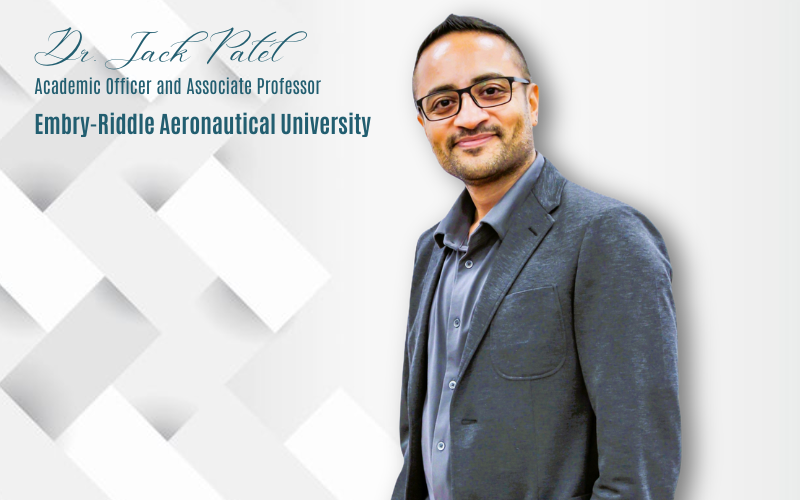
Jack Patel : Embry-Riddle Aeronautical University (ERAU) is the world’s largest accredited university system specializing in aviation and aerospace higher education, with primary residential campuses in Daytona Beach, Florida, and Prescott, Arizona. In 1926, Embry-Riddle’s founders, John Paul Riddle and T. Higbee Embry, had a vision “to teach the world to fly“ and this year we celebrate 100 years of ERAU! The focus was always on flight. However, the focus is now expanding towards space-flight and developing top astronauts with our Alumnus Mr. Jared Isaacman now leading NASA.
AB : How does the university continue to uphold the founding values of innovation, leadership, and industry relevance while preparing students for the future of aviation and space exploration?
JP : Embry-Riddle Aeronautical University continues to uphold its founding values of innovation, leadership, and industry relevance by embedding students in cutting-edge research, entrepreneurship, and industry partnerships that directly prepare them for the future of aviation and space exploration. Through experiential learning, leadership development, and strong ties to aerospace employers, ERAU ensures graduates are ready to lead in areas like advanced air mobility, cybersecurity, AI, and space commerce.
The three key pillars are as follows:
Innovation: Cutting-edge labs & entrepreneurship, for example through our MicaPlex and Research Park in Daytona.
Leadership: Specialized training & global exposure, for example through Cybersecurity leadership courses, alumni mentorship.
Industry Relevance: Workforce-aligned curriculum & employer ties, for example through
internships, aerospace finance & space commerce programs.
AB : what distinguishes the university from traditional higher education institutions in terms of academic philosophy and industry engagement?
JP : Embry-Riddle Aeronautical University distinguishes itself from traditional higher education institutions by fusing academic philosophy with direct industry engagement, creating a model that is uniquely tailored to the aviation and aerospace sectors. ERAU has a global reach with deep industry ties and direct pipelines to careers in Aviation and Aerospace.
AB : With campuses, online programs, and international collaborations, how does the university ensure a consistent standard of educational excellence across all learning environments?
JP : ERAU maintains a core curriculum framework across Daytona Beach, Prescott, Worldwide (online), and Asia-Pacific campuses. This ensures that whether a student is in Singapore or Florida, they receive the same rigor and depth in aerospace and aviation education. Programs are accredited by recognized bodies such as SACS, ABET and AABI, with continuous reviews to guarantee global consistency in engineering, aviation, and business programs. Professors across campuses and online platforms are all trained and credentialed centrally by the University administration. Faculty are industry experts, often with direct aerospace experience, ensuring students everywhere learn from practitioners, not just academics. Students at all campuses and online can participate in research projects tied to NASA, Boeing, Airbus, and other aerospace organizations, ensuring equal exposure to cutting-edge challenges. The Worldwide campus offers flexible online degrees with the same faculty oversight and curriculum as on-campus programs. Students benefit from virtual labs, simulators, and interactive platforms that replicate hands-on learning.
AB : As the aerospace industry undergoes rapid transformation, how is Embry-Riddle positioning itself to remain a global leader in aviation and aerospace education?
JP : Through anticipating industry transformation and aligning its academic philosophy, research, and partnerships with the future of flight and space
exploration. Programs in advanced air mobility, space commerce, cybersecurity, and uncrewed systems prepare students for emerging aerospace sectors. ERAU integrates sustainability into aviation education, emphasizing green technologies, alternative fuels, and carbon reduction strategies. With campuses in the U.S. (Daytona Beach, Prescott) and ERAU Worldwide (online, including Singapore), the university ensures consistent academic excellence across borders. ERAU maintains strong ties with NASA, Boeing, Airbus, Lockheed Martin, and SpaceX, embedding students in real-world projects.
Research centers and labs collaborate directly with industry to solve challenges in autonomous flight, space traffic management, and sustainable aviation fuels.
AB : how are these curricula continuously updated to align with evolving industry requirements?
JP : ERAU works closely with industry advisory boards made up of leaders from NASA, Boeing, Airbus, Lockheed Martin, SpaceX, and major airlines. These boards provide direct feedback on workforce needs, emerging technologies, and regulatory changes, which are then integrated into course updates. Professors are often active practitioners or researchers in aerospace, cybersecurity, and space commerce. Their ongoing projects—such as in autonomous flight systems, sustainable aviation fuels, and space traffic management—feed directly into classroom content. ERAU programs are accredited by ABET (engineering), AABI (aviation), and AACSB (business), requiring regular curriculum reviews and updates. This ensures ERAU’s courses meet international standards and remain competitive globally.
AB : What role do interdisciplinary learning and project-based education play in helpingstudents develop practical problem-solving skills before entering the workforce?
JP : By combining interdisciplinary collaboration with project-based, hands-on education, ERAU ensures students graduate not only with technical knowledgebut also with the problem-solving agility, teamwork, and leadership skills demanded by the aerospace industry. This makes them uniquely prepared to thrive in aviation and space exploration careers. Students apply theory in flight simulators, wind tunnels,and mission control labs, bridging classroom knowledge with operational practice.
AB : With emerging sectorssuch as autonomous systems, commercial space operations, and artificial intelligence gaining momentum, how is the university preparing students for these next-generation career opportunities?
JP :
Autonomous Systems: ERAU offers degrees and concentrations in Uncrewed and Autonomous Systems, covering design, operations, and regulatory frameworks. Hands-On Training: Students work with drones, robotics, and autonomous flight simulators, gaining practical experience in systems integration and safety protocols. Industry Partnerships: Collaborations with aerospace companies and defense organizations expose students to real-world autonomous applications, from urbanair mobility to defense systems.
Commercial Space Operations: ERAU pioneered curricula in space commerce, finance, and
law, preparing students for careers in satellite operations, launch services, and space business management. Research Centers: Students engage in projects on space traffic management, orbital debris mitigation, and mission planning, directly tied to the needs of commercial space enterprises. Global Exposure: ERAU’s international collaborations connect students to space hubs in Asia-Pacific, Europe, and the U.S., ensuring they understand the global nature of space operations.
Artificial Intelligence: ERAU integrates AI into coursework on flight systems, predictive maintenance, and aerospace cybersecurity.
Applied Research: Students participate in projects using machine learning for air traffic optimization, autonomous navigation, and risk assessment.
Cross-Disciplinary Integration: AI is taught not just as a technical skill but as a tool for business, safety, and leadership in aerospace contexts.
AB : how do Embry-Riddle’s campusesprovide students with real-world technical exposure and hands-on learning experiences?
JP : ERAU’s campuses are immersive aerospace ecosystems—students don’t just study aviation and space, they live it. By combining flight training, engineering labs, space systems, and industry partnerships, ERAU ensures graduates enter the workforce with practical problem-solving skills, certifications, and direct industry experience. For example: Flight Line Access: At Daytona Beach and Prescott, students train in ERAU’s own fleet of aircraft, gaining pilot certification alongside their degree. Full-motion simulators replicate commercial and military flight conditions, preparing students for complex scenarios before they ever enter the cockpit.
AB : Couldyou elaborate on the university’s investments in simulation technologies, engineering laboratories, and researchcenters that supportboth academic and industry-focused projects?
JP : Embry-Riddle Aeronautical University (ERAU) has made significant investments in simulation technologies, engineering laboratories, and research centers to ensure students gain both academic depth and industry-ready skills. These facilities are designed not only for classroom learning but also to support applied research and collaborative projects with aerospace partners. For example, ERAU collaborates with NASA and industry partners to explore urban air mobility, electric aircraft, and sustainable aviation technologies.
AB : How do the university’s physical and digital learning infrastructures contribute to creating an immersive and future-ready educational environment for students worldwide?
JP : ERAU has built both physical and digital infrastructures that work together to create an immersive, future-ready educational environment for students worldwide. This dual approach ensures that whether students are on campus, online, or part of international collaborations, they experience the same high standard of aerospace-focused learning. For example: Wind tunnels, propulsion labs, robotics labs, and space systems facilities allow students to design, test, and refine aerospace technologies. Online students use interactive platforms that replicate flight training,mission control, and engineering experiments.
AB : how do partnerships with aerospace organizations help students gain valuable internship, training, and employment opportunities?
JP : ERAU leverages its deep partnerships with aerospace organizations to give students direct access to internships, training, and employment opportunities that bridge the gap between classroom learning and industry practice. These collaborations are a cornerstone of ERAU’s educational model. ERAU’s long-standing relationships with companies like NASA, Boeing, Airbus, Lockheed Martin, SpaceX, and major airlines create structured internship and co-op pathways. Many students secure internships as early as their sophomore year, gaining hands-on experience in engineering, flight operations, cybersecurity, and space commerce.
AB : Beyond academic achievement, how does Embry-Riddle nurture leadership, teamwork, communication, and entrepreneurial skills among its students?
JP : ERAU goes far beyond technical training—it deliberately nurtures leadership, teamwork, communication, and entrepreneurial skills so students graduate as well-rounded professionals ready to thrive in the aerospace industry. ERAU integrates leadership development into aviation, engineering, and business curricula, teaching students how to manage teams, make decisions under pressure, and lead in complex aerospace environments. Clubs like the Student Government Association, Women in Aviation, and professional societies give students opportunities to practice leadership in real-world contexts. Industry mentors and alumni guide students in developing leadership styles suited to aerospace careers. Capstone projects require students from different disciplines (engineering, business, cybersecurity, space commerce) to collaborate, mirroring the teamwork needed in aerospace organizations.
AB : .what are some of the university’s most significant ongoing R&D initiatives in aerospace engineering, cybersecurity, autonomous systems, and space sciences?
JP : ERAU is currently leading major R&D initiatives in aerospace engineering, cybersecurity,
autonomous systems, and space sciences, with projects ranging from FAA-funded aviation cybersecurity research to advanced flight simulators capable of simulating cyberattacks. These efforts not only advance industry knowledge but also embed students directly into cutting-edge research environments. Firstly Research labs at ERAU are developing drone and robotics technologies, integrating AI for autonomous navigation and mission planning. Secondly ERAU co-leads with NASA and NSF to strengthen the aerospace cybersecurity workforce, addressing challenges in securing AI-enabled flight systems, airline operations, and space-based technologies. This includes annual workshops that connect students with industry leaders. Thirdly ERAU collaborates with industry and government to prepare cities for air taxis and electric aircraft, focusing on safety, integration, and infrastructure readiness. Finally ERAU leads pioneering work on orbital debris mitigation and safe satellite operations, critical for the growing commercial space sector.
AB : which recent awards, achievements, or institutional milestones are you most proud of and why?
JP : ERAU has recently celebrated major milestones in its centennial year, including earning ten Top-10 honors in the 2026 U.S. News & World Report rankings, securing multimillion-dollar federal research grants, and breaking ground on new facilities such as a state-of-the-art ROTC complex. These achievements highlight ERAU’s leadership in aerospace education, research, and student success. Rankings place ERAU alongside elite institutions, reinforcing its credibility worldwide.
AB : How are faculty members and students collaborating on cutting-edge research projects, and what impact are these innovations expected to have on the future of aviation and aerospace industries?
JP : ERAU faculty and students collaborate closely on cutting-edge research projects that not only advance academic knowledge but also directly influence the future of aviation and aerospace industries. These collaborations are structured to blend faculty expertise with student innovation, ensuring that research outcomes have both scholarly and practical impact. Faculty lead specialized centers (e.g., Cybersecurity & AI Lab, Space Traffic Management Center, Advanced Air Mobility Research Group) where students are embedded as research assistants, gaining hands-on experience.
About the Author