
Aerius Leasing
Aerius Leasing, headquartered in Singapore with an office in Dubai, is led by aviation professionals with over 50 years of combined industry experience. The company specializes in aircraft leasing, sales, asset management, financing, consultancy, and brokerage for both fixed-wing and rotary-wing aircraft. Renowned for its integrity, professionalism, and customer-focused approach, Aerius Leasing delivers tailored aviation solutions through its global expertise and extensive industry network.
AviationBizz : What inspired the establishment of Aerius Leasing, and how did the company identify opportunities in the rapidly evolving global aviation leasing market?
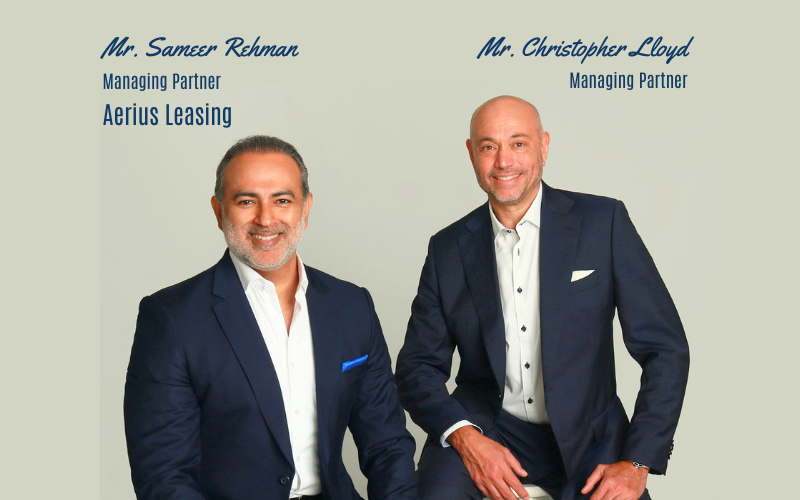
Sameer Rehman : Aerius Leasing was founded in 2024 by Chris Lloyd and Sameer Rehman, industry veterans with over 55 years of of industry expertise, in-depth specialist knowledge, and a vast global network of connections. Chris came from a helicopter operating, broking and leasing background and Sameer from an OEM background specialising in the finance and rotary wing space.
The rotary wing leasing market is relatively new, compared to the established commercial aviation leasing market which has many players and new opportunities are few. There are only a handful of helicopter lessors and with recent consolidation that number is shrinking. Aerius identified an opportunity for a new, nimble and local lessor in both the global helicopter and general aviation fixed wing leasing markets, to offer a bespoke, tailored solution to operators. We are not just focussed on the transaction, we are focussed on building the relationship and working with our customers to meet their needs.
Unlike the larger helicopter lessors who are more focused on the newer aircraft, Aerius offers leases across the aircraft lifecycle range. We will look at mid life and end of life assets as well as newer assets, to cater to our customer’s requirements.
Whilst the commercial aviation lessors lease larger jets as well as regional aircraft, In the GA special mission fixed wing market, there are few lessors serving the Asia-Pacific region. This is an under serviced market for an asset class that has strong residual values with often government backed contracts, where the operators are often the same as the helicopter providers. This is an area Aerius is focusing on, together with the rotary wing market.
In addition to operating lease, we also offer a financing product to the GA market. This is by way of a risk mitigation tool called Aircraft Non-Payment Insurance or ANPI that allows lenders who would not normally consider the asset class or jurisdiction to lend into this space. Whilst with an operating lease we would require our lessee to have a revenue stream by way of an end user contract, the financing product is based on the credit of the buyer and the asset itself. This product is suitable for corporations or individuals who wish to purchase an aircraft for their own use, as opposed to placing it on a contract.
AB : How has Aerius Leasing built its vision around operational excellence, customer-centric leasing solutions, and long-term partnerships within the aviation ecosystem?
Christopher Lloyd : Aerius has built an experienced team of industry experts including on the legal and technical side. This is a critical area of the leasing business. As owners of aviation assets, we need to provide technical oversight for our investors, as well as assist our lessees with the technical aspects of the leasing process, in particular on issues such as OEM power by the hour transitions, and return conditions at lease termination, which if not managed carefully can be very costly for the lessee. We work closely with our customers to ensure this process runs as smoothly as possible, reducing their risk exposure and assisting them to keep costs down. We strive to ensure the whole lifecycle of the lease works smoothly and is a successful partnership with our customers, as we look to build long-term relationships in the market. Often our customers are entering an operating lease for the first time and we are able to walk them through the process and assist in making the transaction as smooth as possible, which will lead to further leases in the future.
AB : From an R&D and fleet optimization perspective, what early challenges in aircraft asset management encouraged the company to invest in technology-driven leasing strategies?
SR : In addition to managing our own fleet, we also offer an asset management service for owners of aircraft, who could be banks, equity investors or investment funds, using an aircraft management software tool that tracks maintenance and technical aspects of the aircraft in order to provide oversight and timely reporting to the asset owners. This provides the owners with a level of comfort that their assets are being tracked, the operators are performing as they are required to do under the terms of our lease agreements, and the asset values are maintained.
AB : How does Aerius Leasing differentiate its aircraft leasing and financing solutions through advanced digital asset management and operational analytics?
SR : Aerius Leasing differentiates itself through a highly data-driven and asset-focused approach to leasing and aviation finance. We leverage advanced digital asset management systems to monitor aircraft utilization, maintenance status, lifecycle costs, operational performance, and market value trends in real time.
This allows us to make faster and more informed decisions regarding asset deployment, risk mitigation, and portfolio optimization .In addition, our operational analytics capabilities enable us to tailor leasing structures around the specific operational realities of each customer. Rather than offering purely standardized financing products, we utilize market intelligence, technical data, and operational performance indicators to create flexible solutions that improve both operator efficiency and asset security throughout the lease lifecycle.
AB : Could you elaborate on the role of predictive maintenance technologies and data-driven monitoring systems in improving aircraft lifecycle efficiency and fleet reliability?
CL : Predictive maintenance technologies are becoming increasingly important in modern aviation asset management. Through the use of data analytics, aircraft health monitoring systems, and predictive maintenance platforms, operators can identify potential technical issues before they become operational disruptions. This significantly improves dispatch reliability, reduces unscheduled downtime, and lowers long-term maintenance costs. From a leasing perspective, these technologies also enhance residual value protection and lifecycle management. Better visibility into component health, engine performance, and maintenance planning allows lessors to optimize maintenance reserves, improve transition planning, and reduce technical risk across the portfolio. Ultimately, predictive maintenance supports safer, more efficient, and more sustainable fleet operations.
AB : What R&D initiatives are being undertaken to integrate next-generation aviation technologies, fuel-efficient aircraft models, and smart leasing solutions into your portfolio?
CL : At Aerius Leasing, we continuously evaluate emerging technologies, next-generation aircraft platforms, and evolving operational trends to ensure our portfolio remains aligned with the future of aviation. Our focus includes modern fuel-efficient aircraft and helicopters, digital fleet management technologies, enhanced maintenance analytics, and smarter lease administration systems.
We are also actively exploring innovative leasing structures that support operators transitioning toward newer-generation and lower-emission aircraft. Sustainability and operational efficiency are becoming increasingly interconnected, and we believe lessors must play an active role in supporting the industry’s transition toward more environmentally responsible aviation solutions.
AB : How do you assess the growing demand for aircraft leasing services across emerging aviation markets, particularly in Asia and the Middle East?
SR : The leasing market for rotary wing and GA fixed wing assets in the Middle East and in Asia is still relatively young, and underserved. We see these markets as areas that are growing as operators are getting more educated on the benefits of an operating lease, and more comfortable with this model.
Due to the recent consolidation in the helicopter leasing world, there are only a few global lessors, who are based predominantly in Europe. Aerius is based in Singapore and Dubai, thereby servicing these markets directly and having a local presence, with relationships we have built up over many years.
We are also seeing leasing being accepted more in Asia in general, across different segments of the industry. It has been prevalent in the oil and gas market for many years now, but we are seeing lease penetration in the EMS and utility space (fire-fighting, utility VFR operations) as well las the special mission fixed wing market. Aerius Leasing provides leasing services to all of these markets, in Asia and worldwide.
AB : In what ways is digital transformation influencing innovation in aviation leasing, fleet planning, and customer engagement strategies?
SR : Digital transformation is fundamentally reshaping the aviation leasing industry. Access to real-
time operational data, predictive analytics, and enhanced market intelligence is enabling more efficient fleet planning, faster decision-making, and improved customer responsiveness. For leasing companies, digital tools improve everything from technical oversight and lease administration to customer communication and portfolio risk management. At the same time, operators increasingly expect faster execution, greater transparency, and more tailored solutions. Digitalization allows lessors to respond to these expectations more effectively while improving internal efficiency and operational scalability.
AB : What key business strategies have helped Aerius Leasing strengthen its global presence and build long-term relationships with airline operators and aviation partners?
SR : Aerius Leasing has focused on building long-term relationships based on flexibility, reliability, and deep sector expertise. Aviation is fundamentally a relationship-driven industry, and we believe strong partnerships are built through responsiveness, trust, and the ability to structure practical solutions for complex situations. Our strategy has also emphasized global connectivity and regional understanding.
We work across multiple jurisdictions and maintain close relationships with operators, financiers, OEMs, technical providers, and institutional partners worldwide. This international perspective allows us to identify opportunities, solve challenges efficiently, and support customers across diverse markets.
AB : Based on your industry experience, what major shifts have you observed in aircraft leasing trends, airline preferences, and investment patterns over the years?
SR : One of the most significant shifts has been the increasing importance of operational flexibility and capital efficiency for airlines and operators. Leasing has evolved from being primarily an alternative financing tool to becoming a central strategic component of fleet management. We have also seen growing investor interest in aviation assets from non-traditional capital sources, including institutional investors and regional investment groups. At the same time, sustainability, fuel efficiency, and technological advancement are playing an increasingly important role in fleet planning decisions. Operators today are more focused than ever on operational economics, environmental performance, and fleet adaptability.
AB : How do you view the growth potential of India’s aviation and aircraft leasing industry amid increasing passenger traffic and infrastructure expansion?
CL : India represents one of the most exciting long-term aviation growth markets globally. Rising passenger demand, expanding middle-class travel, regional connectivity initiatives, and significant airport infrastructure investment are all driving strong long-term growth potential. At the same time, India’s aircraft leasing ecosystem is still in a relatively early stage of development compared to more mature global markets. This creates significant opportunities for both domestic and international lessors to participate in the market’s evolution. We believe India has the potential to become a major global aviation and leasing hub over the coming decade.
AB : What technological advancements are expected to transform the Indian aviation ecosystem, particularly in aircraft financing, fleet modernization, and digital operations?
CL : Digital transformation will play a major role in India’s aviation growth story. Advancements in digital fleet management, predictive maintenance systems, AI-driven operational analytics, and paperless transaction processes are expected to improve efficiency across the sector. Fleet modernization will also continue to accelerate as operators increasingly prioritize fuel-efficient and technologically advanced aircraft. Additionally, improvements in digital financing platforms and asset management technologies are likely to streamline aircraft financing and leasing transactions, making capital deployment more efficient and transparent.
AB : From an R&D standpoint, how can India strengthen its capabilities in aviation technology, MRO services, and sustainable aircraft management to compete globally?
SR : India has significant potential to become a major global center for aviation technology, MRO services, and aerospace engineering. Continued investment in technical training, infrastructure, digital capabilities, and industry-academic collaboration will be essential in strengthening these capabilities. There is also a major opportunity for India to position itself as a leader in sustainable aviation support services, including advanced MRO technologies, digital maintenance platforms, and environmentally responsible fleet management practices. Strong policy support and international collaboration will be important drivers of this development.
AB : What are the major opportunities and challenges shaping the future growth of India’s aviation leasing and aerospace sectors over the next decade?
SR : The opportunities are substantial, driven by fleet expansion, increasing passenger demand, infrastructure development, and greater regional connectivity. India’s rapidly growing aviation market creates strong long-term demand for aircraft financing, leasing, technical services, and aviation infrastructure investment. However, challenges remain in areas such as regulatory consistency, taxation frameworks, repossession enforcement, and access to competitive long-term capital. Continued policy reforms and alignment with international aviation financing standards will be critical to supporting sustained growth in the sector.
AB : How important will sustainability, green aviation technologies, and fuel-efficient aircraft be in defining the future direction of the industry?
CL : Sustainability will be one of the defining themes of the aviation industry over the next several decades. Operators, lessors, manufacturers, financiers, and regulators are all increasingly focused on reducing emissions, improving operational efficiency, and supporting environmentally responsible aviation growth. Fuel-efficient aircraft, next-generation engine technologies, sustainable aviation fuel initiatives, and smarter operational management systems will all play a major role in shaping future fleet decisions. Lessors also have an important responsibility in supporting operators’ transition toward more sustainable fleets and operational models.
AB : What policy reforms or industry collaborations would further encourage international aircraft leasing companies to expand their operations in India?
CL : Continued regulatory clarity, stronger creditor protection mechanisms, efficient repossession frameworks, and internationally competitive tax structures would significantly strengthen India’s attractiveness as an aviation leasing jurisdiction.
Industry collaboration between regulators, financiers, lessors, airlines, OEMs, and MRO providers will also be essential in developing a mature and globally competitive ecosystem. Initiatives that support talent development, financing accessibility, and international best-practice adoption would further accelerate industry growth.
AB : How does Aerius Leasing incorporate sustainability, environmental responsibility, and ethical business practices into its long-term corporate vision?
SR : Aerius has a strict due diligence and know your customer process that our customers are required to satisfy before we enter into lease and finance offerings. Together with our shareholders, we are committed to ethical business practices and we expect this of our customers as well.
We strive to develop a balanced portfolio of EMS (Air Ambulance), wind farm maintenance and para-public services, as well as oil and gas support, which recent events have shown to be as vital an industry as ever before.
AB : What initiatives has the company undertaken to support skill development, aviation education, and workforce empowerment within the industry?
SR : As well as our experienced industry professionals, Aerius has recently taken on staff that are new to aviation and they are being trained alongside our more experienced colleagues to learn the multitude of facets peculiar to this industry.
We encourage all of our staff to keep developing their skillset and stay abreast of industry developments, and to this end are encouraging of our staff to sign up to various courses that are offered that are relevant to their specific areas of expertise.
About the Author