
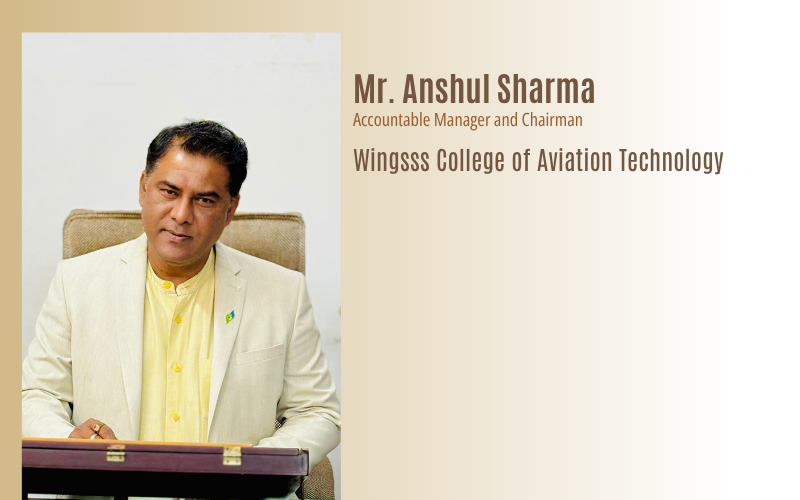
Wingsss College of Aviation Technology
The Wingsss College of Aviation Technology (WCAT), approved by DGCA and affiliated with the University of Mumbai, is one of the best aircraft maintenance engineering (AME) colleges in Pune. Since 2006, WCAT has been shaping the future of aviation professionals through its industry-focused aircraft maintenance engineering courses. As part of the prestigious Shastri Group of Institutes, our sprawling five-acre campus houses state-of-the-art laboratories, live aircraft, diverse engine types, and specialized mechanical and avionics facilities. Recognized among the top AME colleges in Maharashtra, we boast a stellar track record in DGCA module exam success and offer unparalleled placement support through partnerships with leading airlines such as Air India and Air Works. Our students also benefit from valuable field visits that give them real-world exposure to their future workplaces.
AviationBizz : What inspired the establishment of WCAT, and how has the institution evolved over the years to become a recognized name in aviation education?
Anshul Sharma : Wingsss College of Aviation Technology (WCAT) was established with the vision of creating highly skilled aviation professionals capable of meeting the rapidly growing demands of the aviation industry. At the time of establishment in 2006, there was a clear gap between industry expectations and the availability of professionally trained Aircraft Maintenance Engineering personnel in India. The founders envisioned an institution that would combine technical excellence, practical exposure, and industry-oriented training under one roof.
Over the last two decades, WCAT has evolved into one of Maharashtra’s pioneering aviation institutions, recognized for its DGCA-approved training structure, practical learning environment, and strong placement support. Today, WCAT is affiliated with the University of Mumbai for its aeronautics programs and has earned recognition for its state-of-the-art laboratories, live aircraft training facilities, highly experienced faculty, and strong industry connect. The institution has continuously adapted itself to changing aviation technologies and industry standards, making it a trusted destination for aspiring aviation professionals.
AB : Since aviation is a highly specialized field, what vision did you have while creating an institution focused on Aircraft Maintenance Engineering and Aeronautics?
AS : I strongly believed that aviation education must go beyond classroom learning. My vision was to create an institution where students receive practical exposure from day one, alongside strong theoretical knowledge, enabling them to become industry-ready professionals.
The primary objective was to establish a world-class aviation training institute that focuses on safety, technical competence, discipline, and innovation. Since Aircraft Maintenance Engineering is directly linked with aircraft safety and airworthiness, we emphasized hands-on learning on live aircraft, advanced workshops, and modern laboratories. We also envisioned creating opportunities for students to access global aviation careers through industry-relevant training and regulatory compliance.
AB : WCAT has completed nearly two decades in aviation education. What have been the biggest milestones and learning experiences in this journey so far?
AS : Completing nearly two decades in aviation education is itself a proud milestone for WCAT. Some of the institution’s key achievements include:
- Establishing itself as one of the leading DGCA-approved AME institutes in Maharashtra.
- Successfully introducing integrated programs combining AME with B.Sc. Aeronautics.
- Developing advanced infrastructure including live aircraft, modern laboratories, workshops, and hangar facilities.
- Building strong placement support with students working in leading airlines, MROs, and aviation companies in India and abroad.
- Receiving industry recognition and rankings for aviation education excellence.
- Creating a strong alumni network contributing across the global aviation industry.
The journey has also taught us the importance of continuously upgrading technology, maintaining close interaction with industry stakeholders, and adapting education methodologies according to evolving aviation standards.
AB : How does WCAT differentiate itself from other aviation institutions in India in terms of academic quality and practical exposure?
AS : WCAT differentiates itself through its strong focus on practical-oriented aviation education. While many institutions focus heavily on theoretical learning, WCAT provides extensive practical exposure through live aircraft training, advanced laboratories, workshops, and hands-on maintenance practices. Our institution follows DGCA-approved standards and combines them with modern teaching methodologies, industry-oriented training, and mentorship from experienced aviation professionals. The availability of real aircraft, variety of engines, avionics systems, and maintenance workshops gives students real-time technical exposure, helping them understand actual industry operations. Additionally, our strong placement support, industry collaborations, DGCA module-focused studies, and affiliation with the University of Mumbai provide students with both technical expertise and academic excellence.
AB : Could you share more about WCAT’s DGCA-approved training structure and its affiliation with the University of Mumbai for aeronautics programs?
AS : WCAT operates under the approved framework of the Directorate General of Civil Aviation (DGCA), Government of India, following CAR-147 standards for Aircraft Maintenance Engineering training. The curriculum is carefully structured to meet DGCA requirements while ensuring students receive both theoretical understanding and practical competence.
For students pursuing aeronautics programs, WCAT is affiliated with the University of Mumbai, enabling students to earn a recognized academic degree alongside professional aviation qualifications. This dual approach significantly enhances employability and provides students with broader career opportunities in aviation, aerospace, maintenance, and related sectors.
AB : What role does industry-oriented training play in shaping the institution’s academic philosophy and long-term educational goals?
AS : Industry-oriented training is at the core of WCAT’s academic philosophy. Aviation is a practical and safety-driven industry where technical precision and operational awareness are extremely important. Therefore, our teaching approach focuses on aligning academic learning with real-world aviation practices.
The institution regularly interacts with airlines, MRO organizations, aviation experts, and industry professionals to ensure that the curriculum remains updated with current aviation technologies and operational requirements. Our long-term goal is to produce globally competent aviation professionals who can contribute effectively to the aviation ecosystem while maintaining the highest standards of safety and professionalism.
AB : How are these courses designed to meet the evolving demands of the aviation sector?
AS : Both programs are carefully designed to balance technical knowledge, regulatory compliance, and practical skill development. The aviation industry is rapidly evolving with advancements in aircraft systems, avionics, digital diagnostics, and maintenance technologies.
Therefore, WCAT continuously updates its training methodologies and infrastructure to remain aligned with industry expectations. The AME program focuses on aircraft maintenance, inspection, troubleshooting, and safety compliance according to DGCA regulations, while the B.Sc. Aeronautics program strengthens students’ academic understanding of aerodynamics, aircraft systems, aviation operations, and aerospace technologies.
By integrating classroom learning with hands-on practical training, industrial exposure, and live aircraft maintenance practices, students gain industry-ready competencies.
AB : What advantages does this integrated model provide to students in terms of employability and technical expertise?
AS : The integrated AME + B.Sc. Aeronautics program provides students with both professional licensing-oriented technical training and a recognized academic degree. This combination offers significant advantages:
- Enhanced employability across multiple aviation domains.
- Stronger technical understanding of aircraft systems and maintenance procedures.
- Better opportunities for higher education and global career pathways.
- Improved adaptability to both operational and management roles within aviation.
- A balanced blend of practical skills and academic excellence.
This dual qualification model prepares students not only for immediate employment opportunities but also for long-term career growth within the aviation and aerospace sectors.
AB : Could you explain how the curriculum balances theoretical concepts with hands-on practical training on live aircraft and advanced aviation systems?
AS : At WCAT, practical learning is integrated throughout the academic structure. Students are trained on live aircraft, aircraft systems, engines, avionics equipment, and maintenance tools from the early stages of their program.
Theoretical sessions provide students with strong conceptual understanding, while practical workshops and laboratory sessions allow them to apply those concepts in real-world scenarios.
Students gain experience in aircraft inspection, troubleshooting, maintenance procedures, safety protocols, and aviation regulations. This balanced approach helps students build technical confidence, operational discipline, and industry readiness.
AB : WCAT is known for its live aircraft training and modern laboratories. How do these facilities help students gain real-time technical exposure during their academic journey?
AS : One of WCAT’s major strengths is its emphasis on practical exposure through live aircraft training and advanced laboratories. Students receive hands-on training on actual aircraft systems, components, and maintenance practices, which helps bridge the gap between theoretical education and real industry operations.
Working on live aircraft enables students to understand aircraft structures, maintenance procedures, troubleshooting techniques, and safety standards in a practical environment. This exposure significantly improves technical understanding, confidence, and employability.
AB : Industry exposure is crucial in aviation education. How does WCAT collaborate with airlines, MROs, and aviation companies to prepare students for real-world careers?
AS : WCAT maintains strong industry interaction through partnerships, industrial visits, internships, expert lectures, and placement collaborations with airlines, MROs, and aviation organizations.
Students regularly interact with aviation professionals, allowing them to understand current industry practices, maintenance procedures, operational standards, and workplace expectations. This industry engagement helps students transition smoothly from academics to professional aviation careers.
AB : Could you share insights about internships, industrial visits, and placement partnerships that give students practical understanding of aviation operations?
AS : Industrial exposure forms an essential part of the WCAT learning experience. Students participate in internships, industrial visits, airport exposure programs, and maintenance facility tours that provide practical understanding of aviation operations.
The institution also provides placement assistance and career guidance through collaborations with airlines, MRO organizations, aviation companies, and airport service providers. These opportunities help students gain valuable industry exposure and practical confidence.
AB : Beyond technical education, how does WCAT focus on personality development, leadership qualities, and communication skills among students?
AS : At WCAT, student development extends far beyond technical education. The aviation industry requires professionals who possess confidence, discipline, teamwork, leadership abilities, and strong communication skills.
To support this, the institution organizes personality development sessions, group discussions, presentation activities, leadership workshops, communication training, and interactive learning sessions. These initiatives help students become professionally prepared and confident individuals.
AB : How do student clubs, cultural programs, and aviation-related activities contribute to building confidence and teamwork among aspiring aviation professionals?
AS : Student clubs and extracurricular activities play a significant role in building teamwork, confidence, creativity, and leadership among students. Aviation professionals often work in highly coordinated team environments where communication and collaboration are essential.
Participation in technical events, cultural programs, aviation seminars, and collaborative projects helps students strengthen interpersonal skills, improve decision-making abilities, and develop professional confidence.
AB : Aviation is increasingly adopting digital technologies and smart maintenance systems. How is WCAT integrating emerging technologies into its teaching and training methodologies?
AS : WCAT recognizes the growing importance of digitalization, automation, and smart maintenance technologies in modern aviation. The institution continuously upgrades its laboratories, teaching methods, and technical exposure to include evolving aviation technologies.
Students are introduced to advanced avionics systems, digital maintenance procedures, aircraft diagnostics, and modern aviation safety practices. Technology-enabled learning methodologies and practical exposure ensure students remain prepared for future aviation environments.
AB : Is WCAT undertaking any research or innovation initiatives in areas such as aircraft diagnostics, avionics systems, predictive maintenance, or aviation safety technologies?
AS : WCAT encourages innovation, technical exploration, and project-based learning among students and faculty members. Students are motivated to participate in technical projects, maintenance innovation concepts, and aviation research-oriented activities related to aircraft systems, avionics, safety practices, and maintenance technologies.
The institution aims to gradually expand research initiatives in emerging areas such as predictive maintenance, digital diagnostics, aviation safety systems in collaboration with industry experts and academic partners.
About the Author